
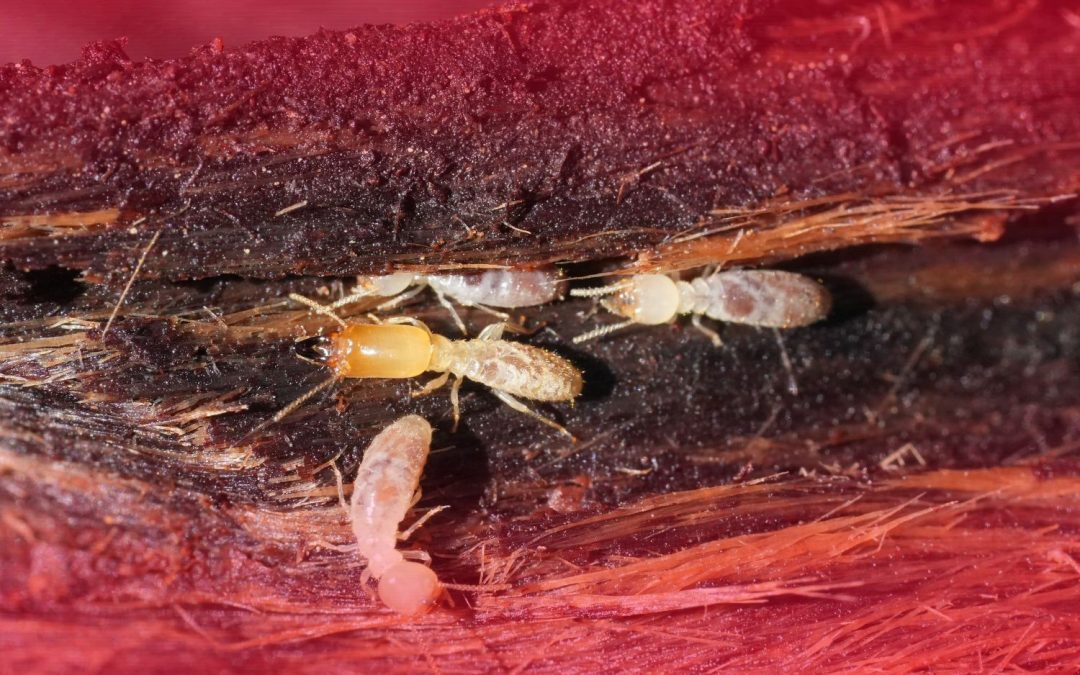
A WDI inspection (Wood-Destroying Insect inspection) checks a home for termites, carpenter ants, carpenter bees, and wood-boring beetles, plus any damage they’ve left behind. Lenders often require one before closing on a home loan, especially for VA and FHA financing. The inspector examines accessible areas like the attic, crawl space, basement, and exterior perimeter, then documents findings on a standardized report.
Georgia’s warm, humid climate keeps termites active nearly year-round, which makes this inspection especially relevant for Metro Atlanta and North Georgia homeowners. Here’s what the process involves, which pests it covers locally, and how it fits into your home-buying timeline.
What Counts as a “Wood-Destroying Insect”?
| Pest | How it damages wood | Behavior |
| Subterranean termites | Feeds on wood from underground colonies, following moisture | Builds mud tubes from soil to wood; doesn’t nest above ground |
| Drywood termites | Feeds and nests directly inside dry structural wood | Lives entirely inside the wood it infests; leaves hexagonal pellet-like droppings (frass) |
| Carpenter ants | Tunnels through wood to build nest galleries; doesn’t eat wood | Prefers wood already softened by moisture or decay |
| Carpenter bees | Drills round entry holes to create nesting tunnels | Doesn’t eat wood; damage is usually cosmetic unless holes multiply over years |
| Wood-boring beetles | Larvae feed inside wood for months or years before emerging | Entry shows as small round exit holes and fine powdery frass |
Termites cause the most damage nationally and locally, since they work continuously and often go undetected until a swarm or visible damage appears.
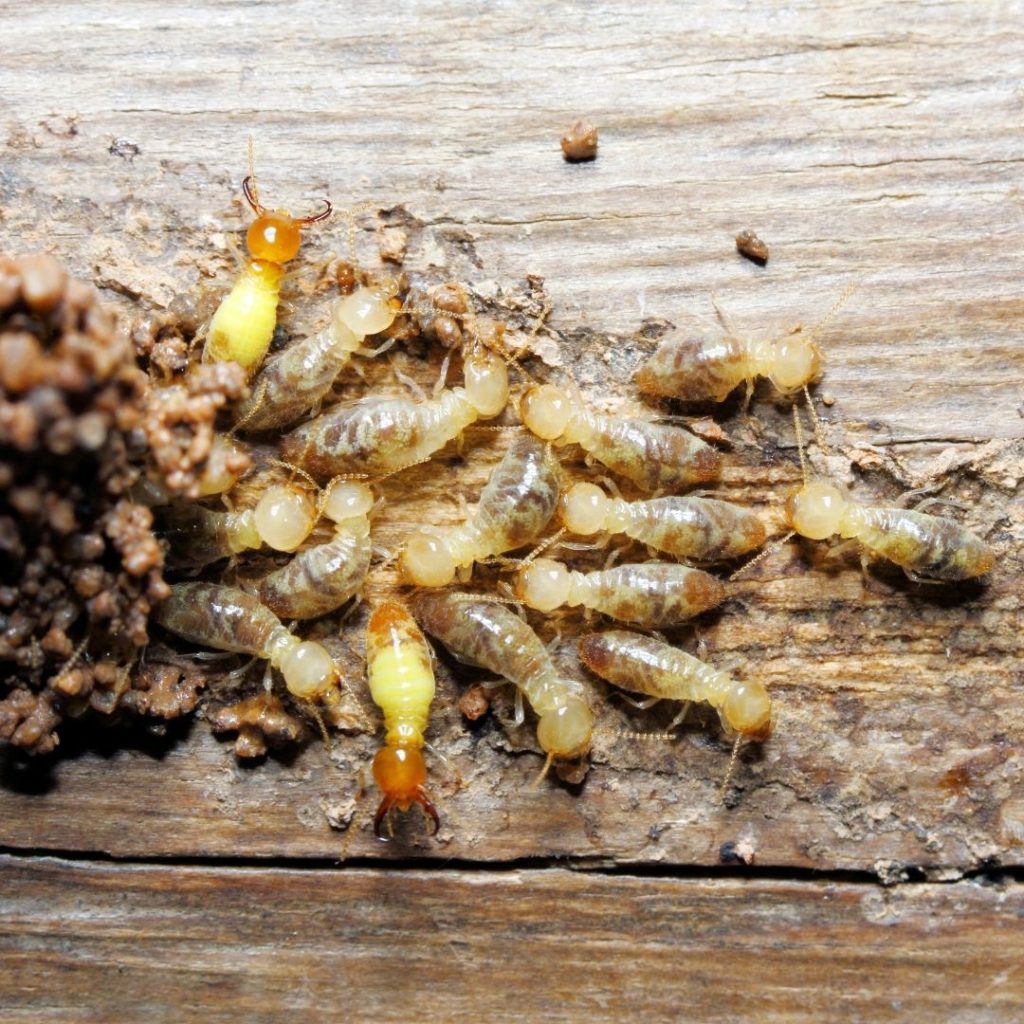
Termites and Other WDIs Common in Georgia
Georgia’s climate supports termite activity throughout most of the year, and homeowners here typically deal with a narrower, but more aggressive, set of species than the national list above:
- Eastern subterranean termites: The most common termite in Georgia and across the eastern U.S. Colonies build underground and travel through pencil-thin mud tubes to reach wood framing, most often found in crawl spaces and along foundation walls. A mature colony can number in the hundreds of thousands.
- Formosan termites: Sometimes called “super-termites,” this invasive subterranean species builds much larger colonies and consumes wood faster than the Eastern subterranean termite. They’re more established in South Georgia and coastal areas but continue expanding inland, including into parts of Metro Atlanta.
- Drywood termites: Less common inland but present in Georgia, particularly near the coast. Unlike subterranean termites, they live entirely inside dry wood, attic framing, furniture, and trim, without any soil contact, which makes them harder to detect until frass appears beneath small exit holes.
- Carpenter ants and carpenter bees: Common statewide. Carpenter ants target wood that’s already damp or decaying, often signaling an underlying moisture problem rather than being the root issue themselves.
Swarm season: Georgia’s termite swarm season typically peaks in late spring, with a secondary swarm window in late summer. Swarmers are drawn to light and are often mistaken for flying ants, one reason a professional inspection matters more than a homeowner’s own visual check.
Why Lenders and Buyers Ask for One
Many mortgage programs, particularly VA and FHA loans, require a WDI inspection before closing because insect damage affects a structure’s long-term value and safety. Even when a lender doesn’t require it, buyers request one to avoid inheriting a hidden repair bill. A clean WDI report also gives sellers a documented way to show a home is free of active infestation, which can smooth negotiations.
What Happens During the Inspection
A licensed pest control professional performs a visual inspection covering:
- Accessible interior areas: attic, crawl space, and basement
- Exterior perimeter: siding, trim, and any wood members in contact with soil
- Probing and sounding: checking wood surfaces for hollow or soft spots
- Visual evidence: mud tubes, frass, shed wings, exit holes, and staining
This is a visual inspection only. Inaccessible or concealed areas, like wood sealed behind finished walls, aren’t part of the scope.
Reading Your WDI Report
Most inspectors use the standardized NPMA-33 form, which has two sections:
- General findings: documents visible evidence of infestation, past treatment history, and any areas that were inaccessible during the inspection
- Diagram mapping: pinpoints the exact locations of any concerns on a structural diagram
A report that shows no visible evidence doesn’t guarantee a home is pest-free forever. It reflects conditions on the day of inspection only.
WDI Inspection vs. a General Home Inspection
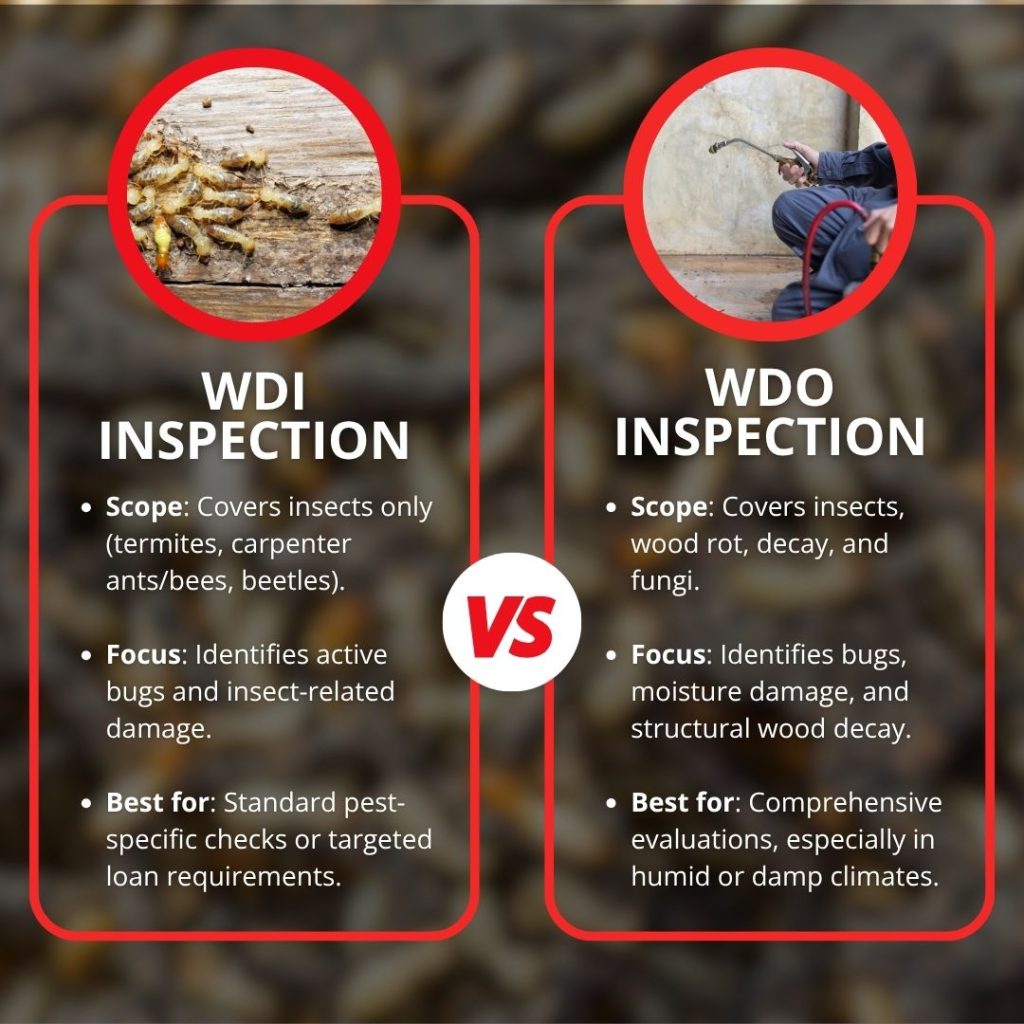
A general home inspection and a WDI inspection cover different ground. A general inspection assesses the condition of major systems, structure, and safety items, including the roof, foundation, electrical, plumbing, and HVAC. A WDI inspection is narrowly focused on insect activity and insect-caused damage, and it isn’t a structural damage report.
Most homeowners benefit from scheduling both, since a general inspection can flag conditions, like wood-to-soil contact or excess moisture, common in Georgia’s humid climate, that make a home more attractive to wood-destroying insects in the first place.
Related Questions to Explore
- How much does a WDI inspection cost? Pricing varies by region and home size, but WDI inspections are typically billed separately from a general home inspection since they require a state-licensed pest control provider.
- Is a WDI inspection the same as a termite bond? No. A WDI inspection is a one-time assessment. A termite bond is an ongoing service contract that covers future treatment, and sometimes damage repair, if termites are found later.
- Who is qualified to perform a WDI inspection? Only a state-licensed pest control company or inspector can complete an official WDI report. General home inspectors are not licensed to issue one unless they hold that separate credential.
- What happens if the report shows insect damage? The report will note the affected areas so you can get repair or treatment estimates before closing. It won’t specify whether the damage is cosmetic or structural, since that’s outside its scope.
- Do older homes need a WDI inspection more than newer homes? Age matters less than exposure. Homes with wood-to-soil contact, poor grading, or a history of moisture problems are at higher risk regardless of build year.
- Are termites active year-round in Georgia? Largely yes. Georgia’s mild winters and humid summers mean termite colonies rarely go fully dormant, though swarming activity, when winged termites are most visible, peaks in late spring with a secondary window in late summer.
When to Call a Professional
If your home inspection turns up conditions that attract wood-destroying insects, exposed wood framing, wood siding touching soil, standing water near the foundation, or you simply want to rule out infestation before closing, it’s worth scheduling a WDI inspection alongside your general home inspection. This is especially true in Metro Atlanta and North Georgia, where humidity and mild winters keep termites active most of the year.
Harmony Home Inspection Services will examine your property for termites and recommend a qualified pest control service, if needed.
Conclusion
A WDI inspection is a small, focused step that protects you from a high, hidden cost. Whether you’re buying, selling, or just want peace of mind about your current home, pairing a WDI inspection with a full home inspection gives you the clearest possible picture of what you’re working with.
Schedule your inspection with Harmony Home Inspection Services and ask us about coordinating a WDI inspection with our specialist partner.