
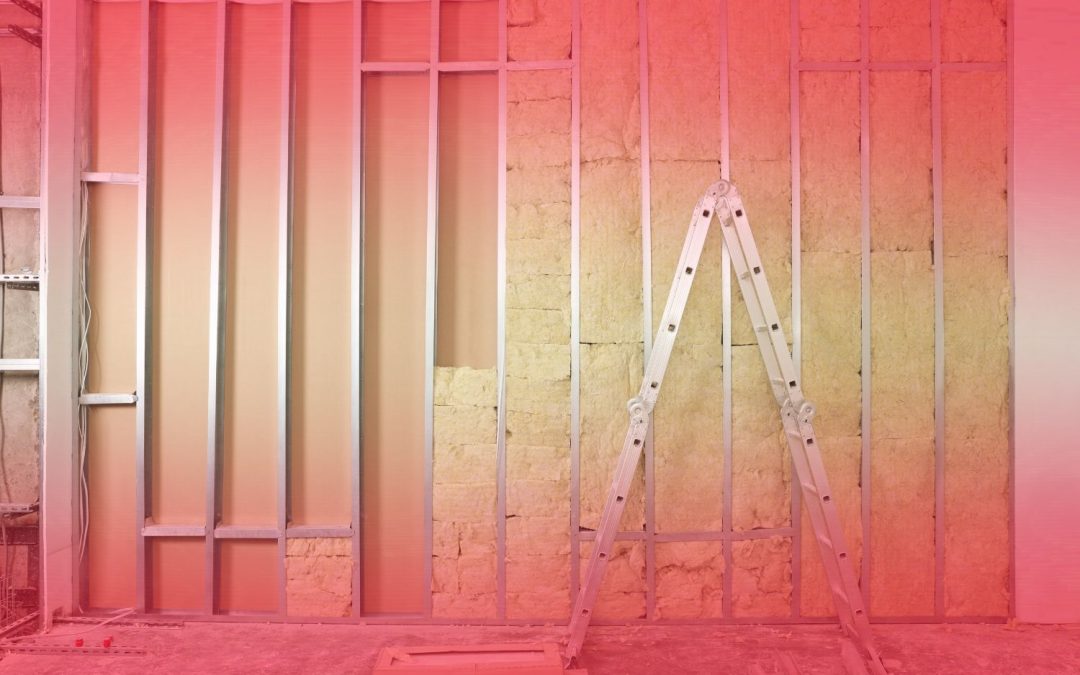
A pre-drywall inspection is a third-party review of your home’s framing, electrical, plumbing, and HVAC systems. Inspectors complete it after rough-in but before insulation and drywall seals everything from view. Because it’s the one point in new construction where every hidden system is still visible at once, Harmony treats this phase as non-negotiable for anyone building a new home. Here’s what gets checked, when to schedule it, and what happens if something’s wrong.
What Is a Pre-Drywall Inspection?
A pre-drywall inspection happens after your framing, electrical rough-in, plumbing rough-in, and HVAC rough-in are complete, but before insulation and drywall go up. Some builders and inspectors call it a framing inspection. However, it actually covers far more than just the frame.
Timing is what makes this inspection valuable. Once drywall is hung, the systems behind it become expensive to access. For example, a torn moisture barrier, a missing fire block, or an undersized HVAC duct takes a subcontractor just minutes to fix at this stage. The same issue, found a year later behind finished drywall, paint, and trim, can mean cutting into a wall that’s already complete.
The American Society of Home Inspectors maintains standards that many inspectors follow for this phase. Harmony’s inspectors train to that standard on every pre-drywall walkthrough.
This inspection is separate from, and goes further than, the municipal rough-in inspection your builder already schedules. A county inspector checks for minimum code compliance across a full day of appointments. In contrast, a dedicated pre-drywall inspection gives one inspector uninterrupted time with your specific home, looking at workmanship details a quick code pass isn’t designed to catch.
What Does a Pre-Drywall Inspection Check?
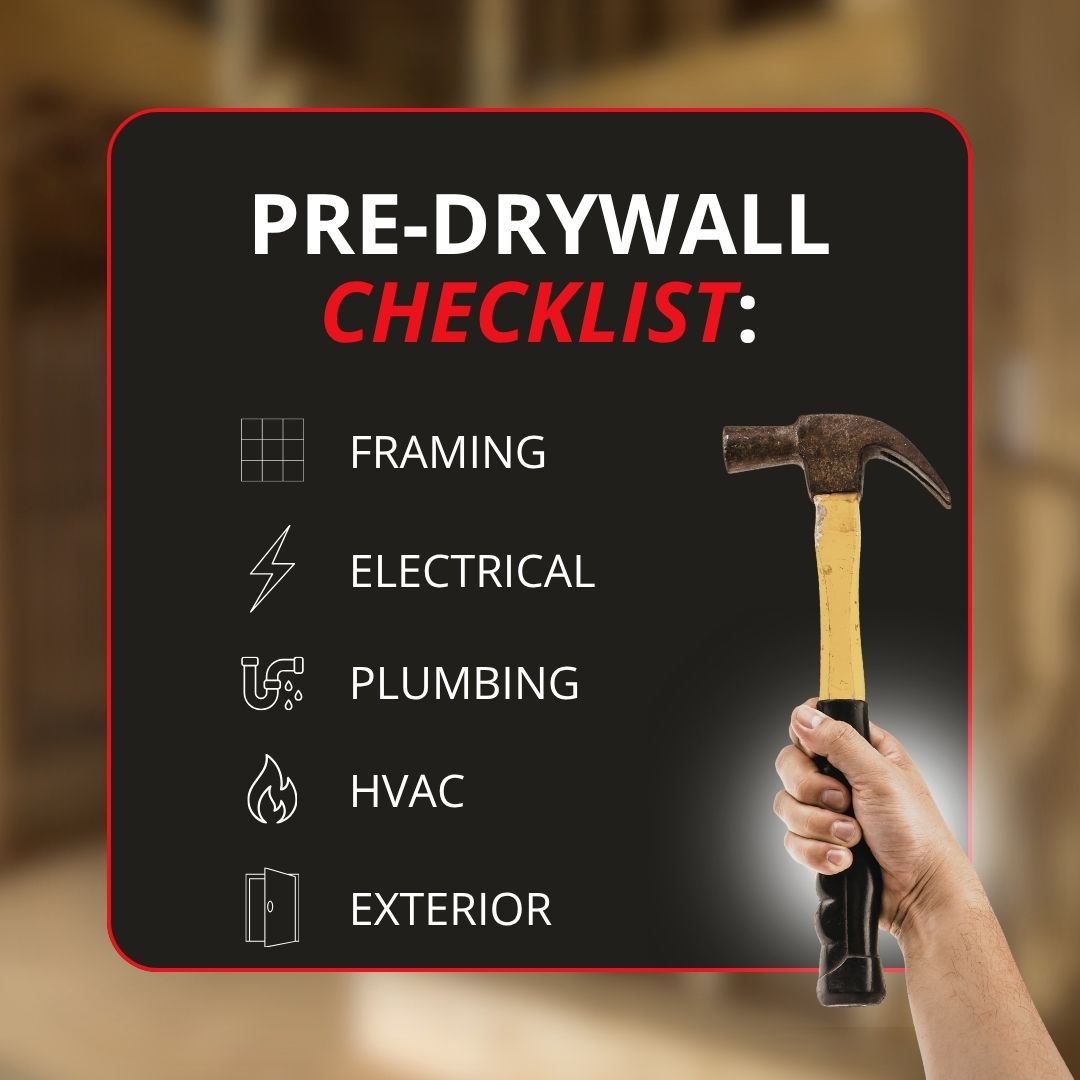
A thorough pre-drywall inspection covers every trade that gets hidden once the walls close.
Trade-by-Trade Checklist
| Inspection Area | What’s Checked | Why It Matters |
| Framing | Studs, joists, roof trusses, and shear walls are plumb, level, and properly nailed | Structural integrity is set here and is nearly impossible to correct later |
| Electrical rough-in | Box placement, wire routing, ground fault zones, panel connections | Prevents fire hazards and code violations that surface at final inspection |
| Plumbing rough-in | Pipe slope, supports, drain-waste-vent lines, pressure testing | Improper slope causes chronic backups for the life of the home |
| HVAC rough-in | Duct layout, return air sizing, equipment placement | Confirms the system is sized correctly for the home’s square footage |
| Windows and doors | Frame leveling, flashing, gap sealing | Prevents water intrusion behind the siding |
| Fire blocking | Draft stopping in wall and ceiling cavities | Slows fire from traveling through hidden spaces |
| Insulation prep | Cavity coverage and clearances | Prevents energy loss and cold spots once walls are closed |
Harmony also provides a sample pre-drywall phase inspection report, so you can see exactly how findings get photographed and documented.
When Should You Schedule a Pre-Drywall Inspection?
Schedule your inspection as soon as your builder confirms rough-ins are complete, but before the insulation crew arrives. Most builders will flag this milestone for you. Still, it’s worth asking early so you don’t miss the window. Once insulation goes in, some components become harder to see even though drywall isn’t up yet.
Most inspections at this stage take one to three hours. The exact time depends on your home’s size and how complex the mechanical systems are. Larger custom homes with more complex HVAC or electrical layouts naturally run longer.
Timing is the part homeowners most often get wrong. Builders move fast once rough-ins pass their own internal checks, and insulation crews often get scheduled within days. So if you wait until you see insulation going in to call an inspector, you’ve likely already lost part of the window. Instead, ask your builder’s superintendent early, as soon as the home is under a roof, when they expect rough-ins to finish. Then book your inspection for that date rather than waiting on a confirmation call.
How to Prepare for Your Pre-Drywall Inspection
A little coordination ahead of time makes the inspection go smoother:
- Confirm site access. Your builder or superintendent needs to know an inspector is coming, since most new-construction sites stay locked outside of work hours.
- Ask your builder for the rough-in sign-off date. Builders track their own rough-in inspections internally, so this date helps you time the independent inspection correctly.
- Be present if you can. Homeowners who walk the site with their inspector get a real-time explanation of findings. They can also ask questions on the spot instead of reading everything cold in a report.
- Bring your plans if you have them. Floor plans and elevation drawings help the inspector confirm the home was framed according to spec, not just according to code minimums.
- Don’t schedule around the insulation crew. If your builder says insulation starts Monday, avoid squeezing in an inspection Friday afternoon. Building in a buffer keeps a builder-side reschedule from costing you the window entirely.
What Happens If the Inspector Finds a Problem?
Your inspector documents every finding with photos and a written report, delivered within 24 hours through Harmony’s digital reporting system. From there, you share that report with your builder’s superintendent and request corrections before drywall installation moves forward.
Most pre-drywall findings are minor. A missing nail plate over a plumbing line or an unsupported duct run, for instance, is quick and inexpensive for a subcontractor to fix at this stage. That’s the entire point of catching problems now, rather than after the walls close.
Caring for Your Home After the Walls Close Up
Once drywall goes up, the systems your pre-drywall inspection verified become part of your home’s ongoing maintenance picture, even though you can’t see them anymore. A few habits help protect what’s now hidden behind your walls:
- Watch for warning signs, not just visible problems. Musty smells, unexplained humidity, or a spike in your utility bill can all point to an issue behind the drywall, like a slow plumbing leak or an undersized HVAC duct.
- Keep your final walkthrough and 11-month warranty inspection on the calendar. These later phase inspections catch anything that develops after move-in while your builder’s warranty is still active.
- Avoid DIY wall modifications without checking first. Homeowners sometimes cut into walls for shelving or renovations without realizing where electrical, plumbing, or HVAC lines run. Keeping your pre-drywall inspection photos on file gives you a reference map of what’s behind each wall.
- Keep plumbing and HVAC on a normal maintenance schedule. A well-installed system still benefits from routine filter changes, water heater flushes, and annual HVAC tune-ups to reach its full expected lifespan.
Related Questions to Explore
- How long does a pre-drywall inspection take? Most pre-drywall inspections take one to three hours. Home size and the complexity of the electrical, plumbing, and HVAC systems both affect the timeline, so large custom builds can take longer.
- How much does a pre-drywall inspection cost? Pricing varies by home size, location, and inspector. Generally, though, a pre-drywall inspection costs a few hundred dollars. That’s similar to or slightly less than a full home inspection, since it skips the attic, crawlspace, and full exterior review. Ask your inspector for an exact quote based on your home’s square footage.
- What needs to be installed before drywall goes up? Framing, electrical wiring, plumbing pipes and vents, HVAC ductwork, and fire blocking should all be complete and code-passed before drywall installation begins.
- Does a pre-drywall inspection replace the county code inspection? No. The county inspector checks for minimum code compliance and typically moves through a home quickly. A third-party pre-drywall inspection goes further, evaluating workmanship details a code pass alone won’t catch. Harmony’s phase inspection overview walks through how this fits alongside the pre-slab and final walkthrough phases.
- What if my builder says pre-drywall inspections aren’t necessary? Even builders with a strong reputation rely on subcontractors juggling multiple jobs at once. A pre-drywall inspection is the only point where electrical, plumbing, HVAC, and framing are all visible together. There’s no later chance to double-check this specific window of work.
- Is a pre-drywall inspection required by code? Not usually. The local building department’s rough-in inspection is required by code. A separate, independent pre-drywall inspection from a third-party home inspector, though, is optional and typically arranged by the homeowner or buyer.
- What if I miss the pre-drywall window? If drywall is already installed, you’ve lost the ability to visually verify framing, electrical, plumbing, and HVAC in a single walkthrough. You can still schedule a final walkthrough inspection before closing, along with an 11-month warranty inspection after move-in. Even so, any issue hidden behind the walls at that point surfaces through symptoms, like a leak or a cold spot, rather than a direct visual check.
When to Call a Professional
If you’re building a new home or buying one mid-construction anywhere in Metro Atlanta or North Georgia, schedule a pre-drywall inspection soon. Book it as soon as your builder confirms rough-ins are wrapping up. This is a narrow window. Once insulation and drywall go in, it closes for good. So if you’re unsure whether your build has reached that point, a quick call to your builder’s superintendent, or to Harmony, can help confirm timing.
Conclusion
A pre-drywall inspection is the one chance to see everything inside your walls before it’s sealed up for good.
- It happens after framing, electrical, plumbing, and HVAC rough-ins, but before insulation and drywall.
- A trade-by-trade review catches issues that are cheap to fix now and expensive to fix later.
- It’s a separate, more thorough step than the county’s code inspection, not a replacement for it.
Harmony Home Inspection Services has performed phase inspections across Metro Atlanta and North Georgia since 2004. Schedule your pre-drywall inspection before your builder’s crew moves on to insulation.