

Your air conditioning system plays a major role in keeping your home comfortable.
However, when mold develops inside the system, it can quietly affect your indoor air quality, your health, and even your home’s value. Many homeowners do not realize there is a problem until the signs become hard to ignore.
Mold in AC units often starts small. It may begin with moisture buildup, a faint odor, or subtle health symptoms. Over time, those small signs can turn into widespread air quality issues that affect every room in the home.
Knowing what to watch for helps you take action early and avoid costly repairs later.
In this guide, we will walk through the most important signs of mold in AC units, explain why they matter, and outline what homeowners can do to protect their homes.
What Causes Mold in AC Units?
Mold in AC units forms when moisture, dust, and limited airflow combine. Air conditioning systems naturally remove humidity from the air, which means moisture is always present inside the system.
When that moisture does not drain or dry properly, mold can grow.
Several conditions increase the risk of mold in AC systems.
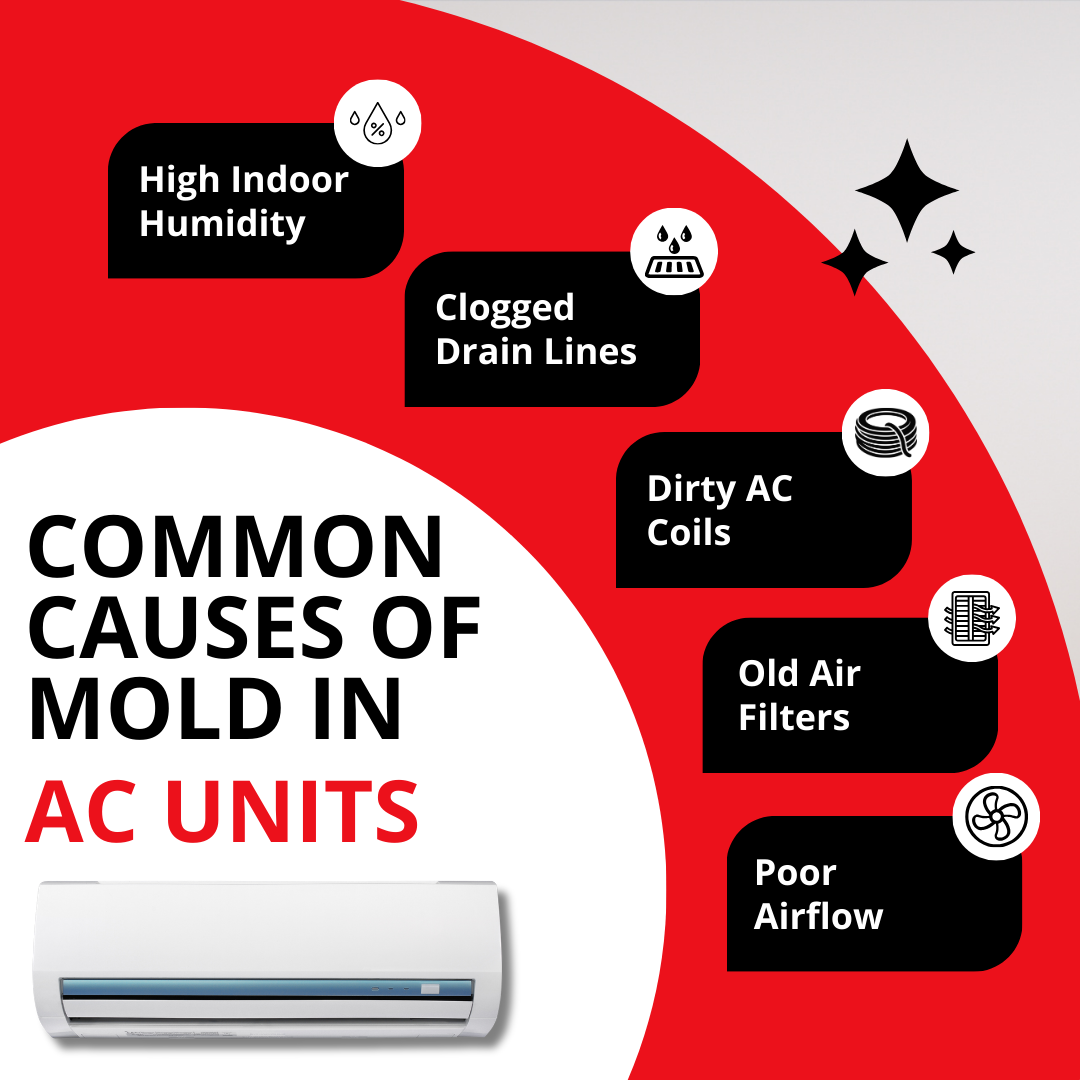
Common causes include
- High indoor humidity that overwhelms the system
- Clogged or slow condensate drain lines
- Dirty evaporator coils that hold moisture
- Infrequent air filter changes
- Poor airflow caused by blocked vents or duct issues
In humid climates, these issues are even more common. Even a well-maintained system can develop mold if moisture builds up in hidden areas like coils, drain pans, or ductwork insulation.
Visible Mold in AC Vents or Around Registers
Visible mold near vents is one of the clearest signs of mold in AC systems. Homeowners often notice dark spots, smudges, or fuzzy growth around supply vents, return vents, or ceiling registers.
This type of mold usually appears because moist air meets dust at the vent opening. While the growth may look minor, it often signals a deeper issue inside the system.
Why Visible Mold Matters
- It suggests spores are already circulating through the ductwork
- It may indicate condensation inside ducts or near vents
- It often returns if the underlying moisture problem remains
Simply wiping vents does not solve the problem. If mold keeps coming back, the source is likely inside the AC system rather than on the surface.
Musty or Mildew Smells When the AC Runs
A musty smell when the AC turns on is a strong indicator of mold in the AC unit. This odor often smells damp, earthy, or like mildew and becomes noticeable when air starts flowing.
Unlike dust smells, mold-related odors usually do not fade quickly. In fact, they often become stronger when the system cycles on after sitting idle.
How to Recognize a Mold-Related Odor
- The smell appears only when the AC runs
- The odor lingers or spreads through multiple rooms
- The smell worsens during humid weather
Because AC systems move air throughout the home, odors caused by mold can affect every living space.
Increased Allergy or Respiratory Symptoms Indoors
Mold in AC systems can trigger health symptoms that improve when you leave the house. This happens because mold spores enter the airflow and circulate throughout the home.
Many homeowners do not immediately connect these symptoms to their AC system. Instead, they assume seasonal allergies or poor air quality are to blame.
Common Symptoms Linked to Mold Exposure
- Sneezing, coughing, or throat irritation
- Itchy eyes or skin
- Sinus congestion or headaches
- Worsening asthma or breathing issues
Children, seniors, and people with respiratory conditions often experience symptoms first. If symptoms improve when spending time away from home, mold in the AC units should be considered.
Excess Moisture or Water Near AC Components
Standing water or heavy condensation near AC equipment is a major warning sign. Mold needs moisture to grow, and AC systems provide multiple opportunities for water buildup.
As a result, homeowners often notice moisture near the indoor air handler, around the drain pan, or along nearby flooring or walls.
Why Moisture Issues Lead to Mold
- Water that does not drain properly creates ideal conditions
- Small leaks can persist unnoticed for long periods
- Condensation problems often occur inside hidden components
Addressing moisture issues early reduces the chance of mold growth inside the system.
Mold Returning After Cleaning or Filter Changes
Recurring mold after cleaning usually means the root cause remains unresolved. While replacing filters and cleaning vents helps with dust, it does not remove mold growing deeper in the system.
Many homeowners feel frustrated when mold reappears despite regular maintenance.
Why Does Mold Keep Returning?
- Filters do not stop mold already inside ducts or coils
- Surface cleaners do not reach hidden areas
- Moisture sources remain active
Recurring mold often signals airflow problems, drainage issues, or insulation concerns that require professional evaluation.
How Mold in AC Units Can Spread Throughout the Home
Mold in AC systems spreads easily because ductwork distributes air to every room. Once spores enter the system, they move wherever the air goes.
This is why mold problems rarely stay isolated to one area.
Risks of System-Wide Spread
- Mold odors that appear in multiple rooms
- Uneven air quality throughout the home
- Increased exposure for occupants
According to the U.S. Environmental Protection Agency, mold can begin growing within 24 to 48 hours when moisture is present, which explains how quickly AC-related mold issues can escalate.
How to Prevent Mold Growth in Homes
Preventing mold starts with controlling moisture and maintaining your AC system. While no home is completely mold-proof, proactive steps greatly reduce risk.
Practical Mold Prevention Tips
- Keep indoor humidity below 60%
- Change AC filters regularly
- Ensure condensate drain lines remain clear
- Use exhaust fans in kitchens and bathrooms
- Address water leaks immediately
Preventive habits work best when combined with regular system inspections and moisture awareness.
How a Home Inspection Helps Identify Mold in AC Systems
A home inspection helps identify conditions that allow mold in AC systems to develop. Inspectors look beyond visible growth and focus on moisture sources and system performance.
What Inspectors Evaluate
- AC system drainage and condensate handling
- Signs of excess moisture or condensation
- Ventilation and airflow issues
- Areas where mold commonly develops
While inspectors do not diagnose mold types, they provide valuable insight into risk factors that homeowners may miss.
What Homeowners Should Do If They Suspect Mold in the AC
Taking action early limits exposure and helps prevent mold from spreading.
When mold in an AC system goes unaddressed, it can affect indoor air quality, trigger health symptoms, and lead to costly repairs. These steps help homeowners respond quickly and reduce risk.
1. Reduce System Use if Odors or Visible Mold are Present
Limit how often you run the AC if you notice musty smells or visible mold near vents. Running the system can push mold spores through the ductwork and spread them to other rooms.
While you should not shut the system down long-term in hot weather, reducing use helps limit exposure until the issue is evaluated.
2. Check for Obvious Moisture or Drainage Problems
Inspect areas around the indoor air handler, drain pan, and condensate line for standing water or damp surfaces. Look for clogged drain lines, water stains, or signs of condensation buildup. Addressing moisture quickly helps remove the conditions that mold needs to grow.
3. Contact an HVAC Professional for System Evaluation
An HVAC professional can inspect coils, drain lines, and internal components where mold often forms. They can identify airflow issues, drainage problems, or system inefficiencies that contribute to moisture buildup.
Proper repairs and maintenance reduce the chance of mold returning.
4. Schedule a Home Inspection to Assess Moisture Risks
A home inspection helps identify moisture sources beyond the AC system, such as ventilation issues, insulation gaps, or hidden leaks.
Inspectors evaluate how moisture moves through the home and highlight conditions that increase mold risk. This step supports long-term prevention, not just short-term fixes.
By acting early and addressing moisture at its source, homeowners can reduce mold risk and protect indoor air quality throughout the home.

Mold in AC Systems Inspection Findings at a Glance
|
Common Finding |
What It Indicates |
Why It Matters |
|
Mold at vents |
Possible duct contamination |
Spores circulate throughout the home |
|
Musty AC odor |
Active mold growth |
Impacts indoor air quality |
|
Standing water |
Drainage issue |
Creates ideal mold conditions |
|
Dirty coils |
Reduced airflow |
Increases moisture retention |
|
High humidity |
Poor moisture control |
Raises mold risk system-wide |
Related Questions
How does mold in AC systems affect indoor air quality?
Mold inside an AC system can release spores into the air every time the system runs. This can lower indoor air quality and contribute to ongoing allergy or respiratory symptoms, especially in homes with poor ventilation or high humidity.
What parts of an AC system are most likely to develop mold?
Mold commonly forms on evaporator coils, inside drain pans, along condensate lines, and within ductwork insulation. These areas tend to hold moisture and remain dark, which creates ideal conditions for growth.
Can high humidity inside a home increase the risk of mold in AC units?
High indoor humidity increases condensation inside AC systems and ducts. When moisture levels remain elevated, mold is more likely to develop on system components and spread through airflow.
How do home inspections identify moisture issues linked to mold?
Home inspections focus on visible moisture, drainage performance, ventilation, and signs of condensation. These findings help identify conditions that commonly lead to mold growth, even when mold itself is not visible.
Can past water damage increase the likelihood of mold in AC systems?
Homes with previous leaks, flooding, or condensation problems often have lingering moisture and home inspection issues. These conditions can increase the risk of mold forming inside AC components or ducts over time.
Why does mold in AC systems often return after cleaning?
Mold frequently returns when moisture sources are not addressed. Cleaning alone does not fix drainage issues, airflow problems, or humidity levels that allow mold to regrow.
Conclusion
Mold in AC units often starts quietly but can spread quickly if left unaddressed. Visible mold, musty odors, moisture issues, and unexplained health symptoms are signs homeowners should never ignore. Early detection protects your air quality, your HVAC system, and your home’s value.
If you suspect mold or moisture issues in your home, Harmony Home Inspection Services can help identify risk factors before they turn into larger problems.
A professional home inspection provides clarity, peace of mind, and practical guidance for protecting your home and family.