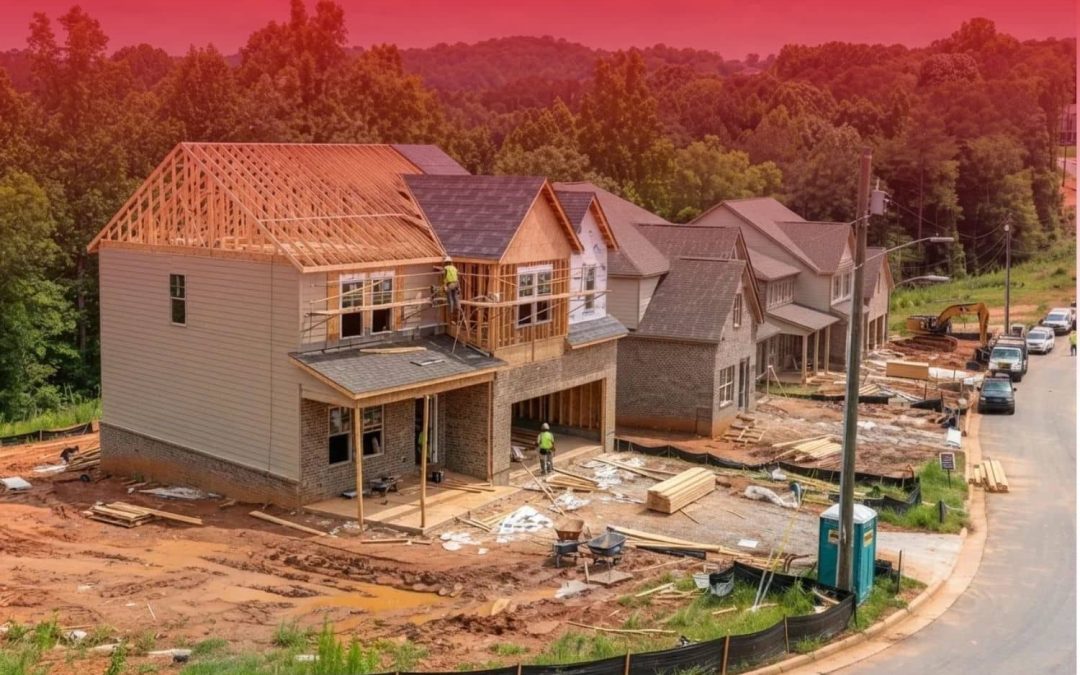
New single-family homes are going up fast across North Forsyth County, but a brand-new house is not necessarily a problem-free house. Every new build deserves an independent inspection, and the best results come from inspecting in phases while the home is being built.
Harmony Home Inspection Services has inspected homes in Cumming and North Georgia since 2004. We understand what tight construction schedules can leave behind. This guide covers where new homes are being built, how buying new differs from buying resale, when to book each inspection, and how to use your warranty before it runs out.
Where Are New Single-Family Homes Being Built in North Forsyth County?
Most new single-family homes in North Forsyth County are being built in builder-run subdivisions near GA-400 and the roads that feed it. Growth has stayed steady. U.S. Census Bureau permit data show Forsyth County approved permits for 2,525 new housing units in 2024 and 1,743 in 2025.
- Meadow Brook Farms: a David Weekley Homes community with 82 homes on more than 100 acres in north Forsyth.
- Sterling Crest: a new neighborhood on Pilgrim Mill Road near GA-400.
- Cumming area communities: newer neighborhoods like Bridleton, Ascot, and Settendown Creek continue to fill in along the Highway 400 corridor.
New Single-Family Homes vs. Resale Homes: What Changes for Buyers?
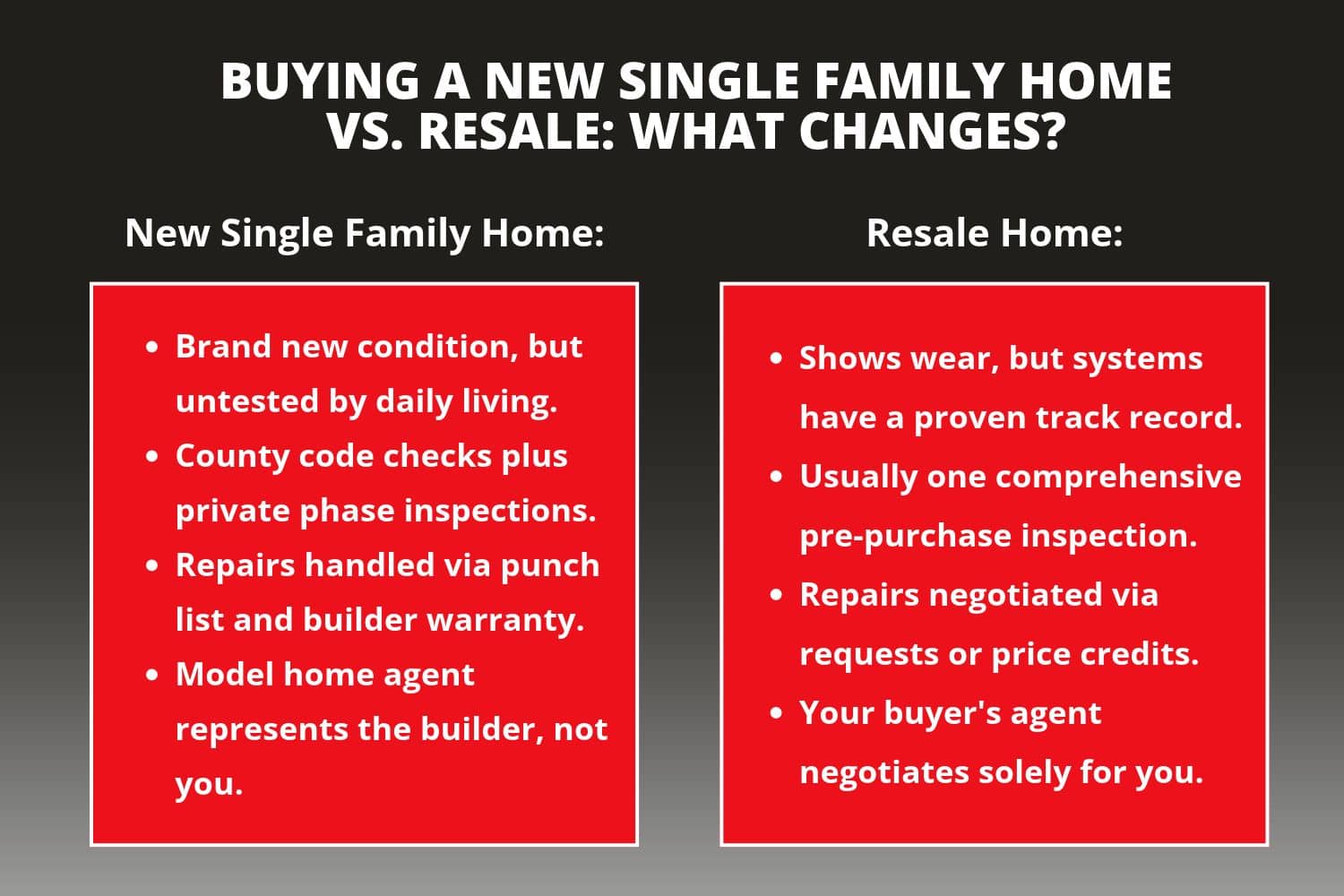
Buying a new single-family home changes who you negotiate with, what protections you get, and how inspections work. Here is a quick side-by-side look.
| New single-family home | Resale home | |
|---|---|---|
| Condition | Brand new, but untested by daily life | Shows wear, but systems have a track record. |
| Inspections | County code inspections during the build, plus optional private phase inspections | Typically one pre-purchase inspection. |
| Fixing problems | Punch list and builder warranty | Repair requests or price changes |
| Warranty | Builder warranty, often a 1-2-10 structure | Usually none, unless you buy a home warranty plan |
| Sales agent | The model home agent represents the builder. | Your buyer’s agent works for you. |
Do New Single Family Homes Need a Home Inspection?
Yes. New single-family homes need a home inspection because county code inspections and private inspections serve different purposes. Forsyth County inspectors check that the work meets minimum code at set stages so the home can get a Certificate of Occupancy. They work for the county, not you, and they move quickly from one job site to another.
A private inspector works on your behalf as the buyer. We evaluate how the home was constructed, how its systems perform, and whether any issues need to be addressed before closing.
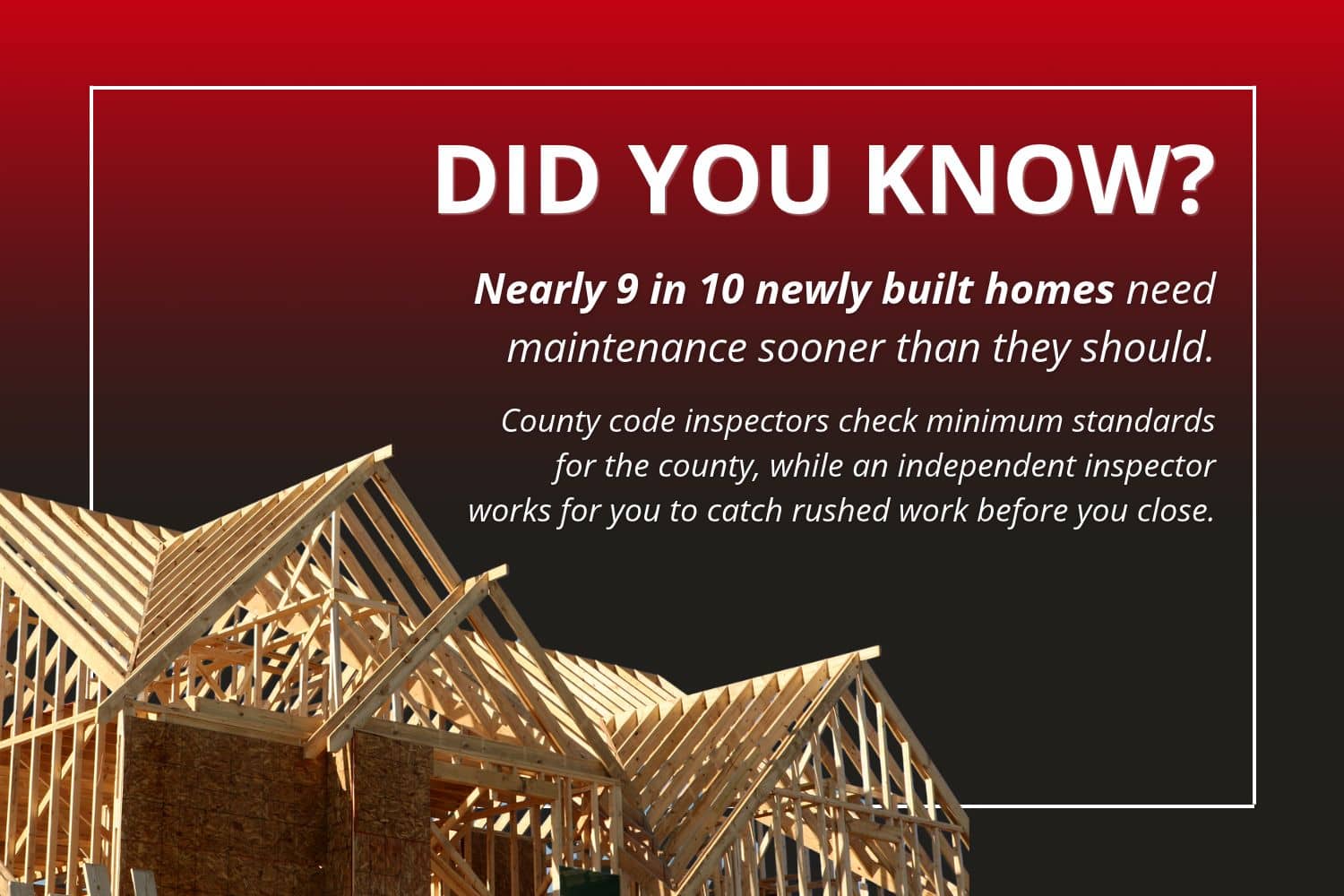
The numbers back this up. A Clever Real Estate survey reported by the National Association of REALTORS® found that nearly 9 in 10 newly built homes need maintenance sooner than they should. Builders under deadline pressure miss details, and those details are cheaper to fix before you move in.
When Should You Schedule Inspections on a New Build?
Schedule inspections at key stages of construction, not just at the end. Each phase lets an inspector see parts of the house that will soon be hidden for good.
| Inspection phase | When to book it | What it can catch |
|---|---|---|
| Pre-foundation | Before concrete is poured | Footing and form issues, plumbing under the slab, early grading |
| Pre-drywall | After framing and rough-ins, before insulation and drywall | Framing, wiring, ductwork, plumbing lines, window flashing |
| Pre-final walkthrough | A few days before your builder walkthrough | Finish defects, system problems, roof and drainage issues |
| 1-year warranty | A few weeks before your first-year warranty ends | Settling cracks, leaks, HVAC trouble, items the builder never fixed |
The pre-foundation and early phase inspections are essential because once the concrete slab is poured, the components beneath it are no longer visible or accessible. The pre-drywall visit is your last opportunity to examine the home’s structural and mechanical components before they are concealed. If you can only book one phase before closing, make it this one or the pre-final walkthrough.
What Problems Do Inspectors Find in New Homes?
Inspectors find many of the same problems in new homes that they find in older ones. The difference is that issues in new homes often result from rushed or overlooked work rather than normal wear and tear. Common findings include:
- Drainage and grading: soil that slopes toward the foundation instead of away from it
- HVAC: ducts that are disconnected, crushed, or poorly sealed in the attic
- Electrical: faulty wiring, open junction boxes, or missing outlet covers
- Plumbing: slow drains and loose fittings
- Safety items: loose stair railings and missing handrails
- Roofing: missing or poorly installed flashing around chimneys, vents, and walls
- Insulation: gaps, thin spots, or attic insulation pushed aside by other trades
Finding these issues does not necessarily mean the builder did a poor job overall. Construction involves multiple trades and moving parts, and occasional oversights can happen on any job site. Catching them early keeps small issues from turning into costly repairs.
How Does the Builder Warranty Protect You?
A builder’s warranty covers certain repairs after closing, but each part of the coverage ends at a different time. According to the Federal Trade Commission, coverage for workmanship and materials usually ends after the first year. Heating, plumbing, and electrical systems are generally covered for two years. Some builders cover major structural defects for up to 10 years.
That first-year deadline is why the 1-year warranty inspection matters. Book it before the anniversary so we have time to report what we find. The FTC also suggests putting every repair request in writing. Keep copies and records of the dates, and consider sending requests by certified mail with a return receipt.
A builder warranty is not the same as a home warranty. A home warranty is a separate service plan you buy, while the builder warranty comes with the house.
How to Prepare for a New Construction Inspection
Getting the most out of a new construction inspection comes down to timing and communication. Because builders control access to active job sites, a little preparation keeps your inspection on schedule and prevents last-minute delays.
Next, stay in close contact with your builder’s site superintendent.
Construction timelines shift constantly due to weather, material deliveries, and subcontractor schedules. Ask your superintendent to notify you at least five to seven days before key milestones, especially before the slab is poured and before insulation and drywall go up.
- Confirm utilities are on: For pre-final walkthrough inspections, water, gas, and electricity must be active so your inspector can test the HVAC system, appliances, and plumbing fixtures.
- Share builder documents: Send your inspector the floor plan, list of structural upgrades, and any change orders so they can verify that what was built matches what you paid for.
- Walk the lot yourself: Note any questions or cosmetic concerns you have spotted so your inspector can take a closer look.
Once you receive your report, organize the findings by priority and submit them to your builder in writing well ahead of closing.
Related Questions to Explore
- Should I get a home inspection on a new construction? Yes. A county code inspection only confirms minimum standards. An independent inspector works for you and checks quality and performance. Learn more about our new construction and phase inspection services.
- When to schedule a home inspection for new construction? Plan for at least two visits: one before drywall is installed and another before your final walkthrough. Add a pre-foundation visit if you can, and a 1-year warranty inspection before the first-year coverage ends.
- Is a Pre-Drywall Inspection necessary? It is one of the most valuable inspections you can buy. Once insulation and drywall go up, framing, wiring, and plumbing are hidden. Here is what’s checked during a pre-drywall inspection. For another inspector’s view, see this pre-drywall inspection guide.
- Should I buy a new townhouse or single family home? It depends on your budget and how much yard and upkeep you want. A single-family home offers more space and privacy. A townhouse often costs less but comes with shared walls and HOA rules. Either way, the same phase inspections apply.
- Why is buying a new single-family home stressful? Buyers juggle build delays, design choices, financing, and a long list of deadlines. Inspections at each phase take some of the guesswork out by showing you exactly what is happening inside the walls.
When to Call a Professional
- Your builder’s schedule shows framing is nearly done.
- Your walkthrough or closing date is less than two weeks away.
- Your first warranty anniversary is coming up.
- You see water pooling near the foundation, cracks, or doors that stick.
Harmony Home Inspection Services serves Cumming, Dawsonville, Buford, Flowery Branch, Gainesville, and the rest of North Georgia. Our team includes a B-1 certified residential building inspector for new construction, and reports arrive within 24 hours. Call us to talk through your build timeline.
Conclusion
- County code inspections check minimums. A private inspector works for you.
- Phase inspections catch problems before walls, slabs, and finishes conceal them.
- Your first-year warranty clock starts at closing, so book a warranty inspection before it ends.