
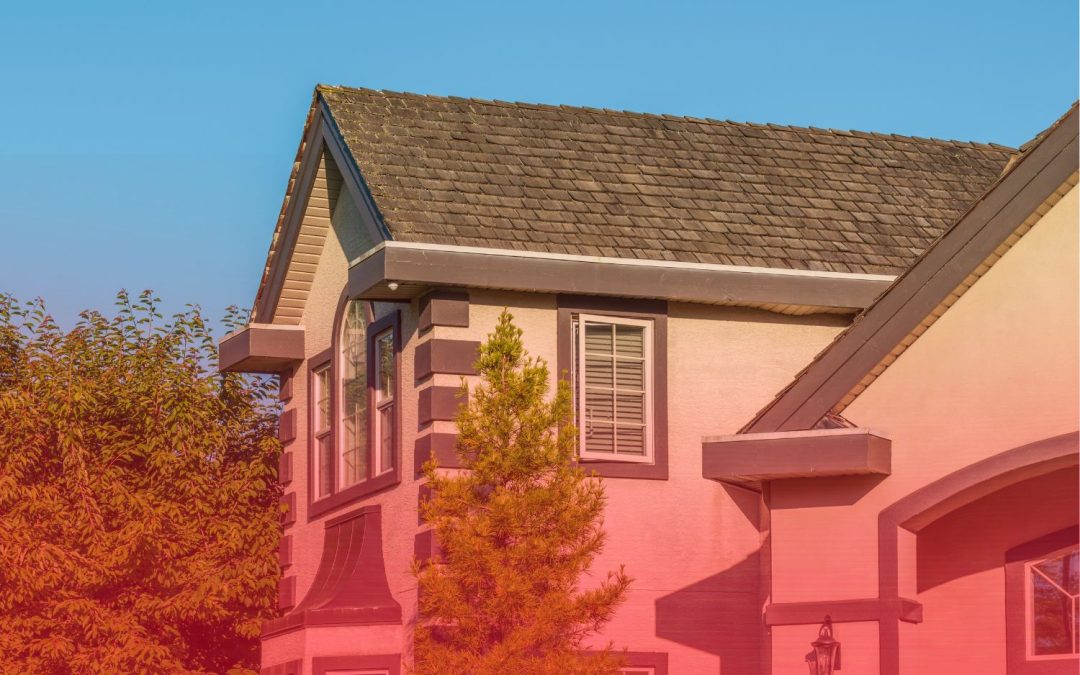
In Metro Atlanta and North Georgia, most roofs last 15 to 25 years, shorter than the national averages you’ll see quoted elsewhere. Georgia’s combination of intense summer heat, high humidity, heavy rainfall, and frequent thunderstorms ages roofing materials faster than milder climates do.
Asphalt shingles, the roof on most North Georgia homes, typically run 15-25 years here versus 20-30 nationally. Metal, tile, and slate hold up longer, but every material ages faster under Georgia’s “climate trifecta” of UV, humidity, and storms. Here’s what to expect by material, what shortens that timeline locally, and when to call for an inspection.
Roof Lifespan by Material in Georgia’s Climate
| Material | National average | Realistic lifespan in Metro Atlanta / North Georgia | Notes |
| 3-tab asphalt shingles | 15-20 years | 12-18 years | Most affordable, shortest-lived; common on older North Georgia homes |
| Architectural (dimensional) shingles | 20-30 years | 18-22 years | The most common choice on newer builds across metro Atlanta suburbs |
| Premium/luxury asphalt shingles | 30-40 years | 25-30 years | Higher upfront cost, better UV and algae resistance |
| Wood shingle/shake | 20-30 years | 15-25 years | Humidity accelerates rot; individual shingles often need spot repair sooner |
| Metal (standing seam/metal shingle) | 30-50 years | 40-70 years | Reflects up to 85% of solar heat; strong choice for Georgia’s heat and storms |
| Clay or concrete tile | 50+ years | 50+ years | Heavy; requires adequate structural support |
| Slate | 75-100+ years | 75+ years | Longest-lasting common material; highest upfront cost |
Manufacturer “30-year” ratings describe a warranty class, not a guaranteed lifespan. Georgia’s UV index and roughly 60% average humidity typically shave several years off the national numbers for asphalt shingles specifically.
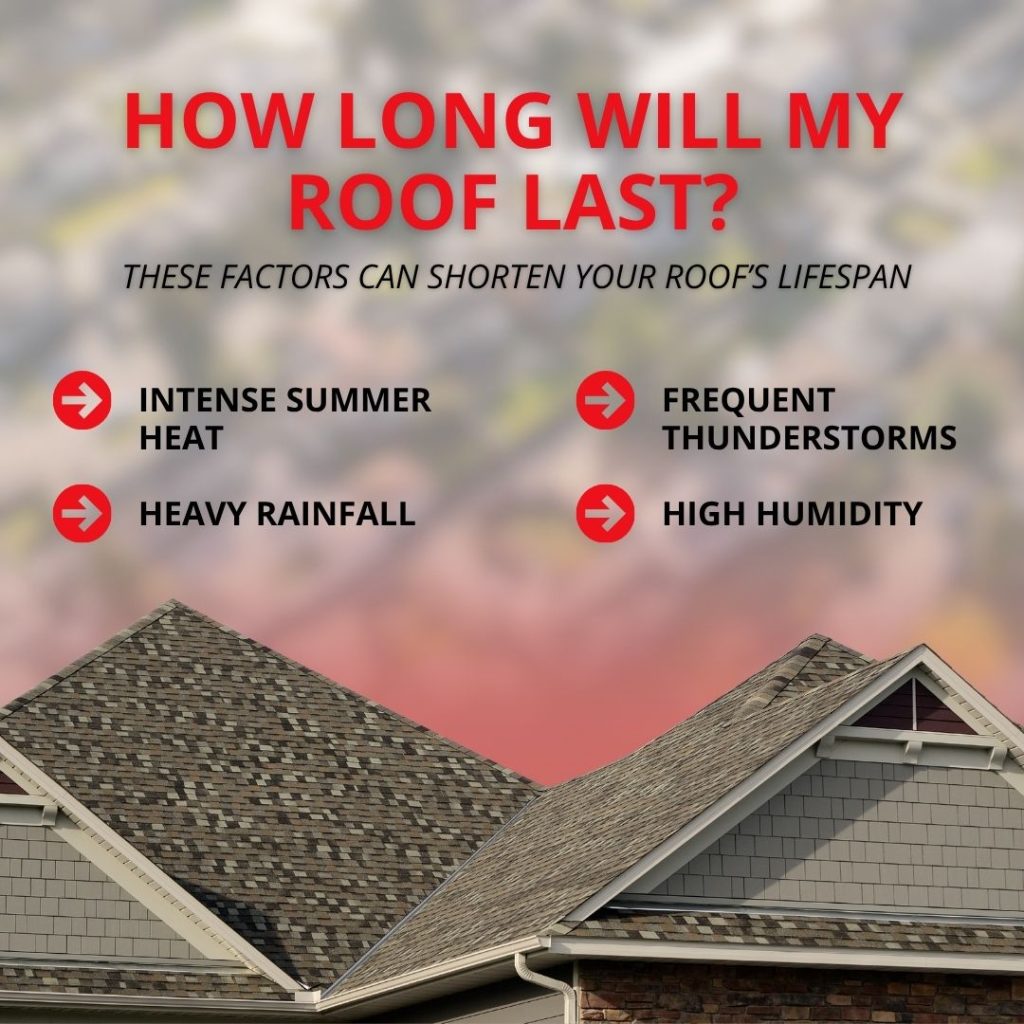
What Actually Determines Your Roof’s Lifespan Here
Material sets the ceiling, but these local factors decide whether a Georgia roof reaches it:
| Factor | How it affects your roof locally |
| Summer heat | Metro Atlanta summers routinely push into the 90s; repeated expansion and contraction stresses shingles and can push unventilated attics past 150°F |
| Humidity | Georgia’s average 60-70% humidity promotes algae and moss growth and contributes to moisture-related decking damage |
| Heavy rainfall | Atlanta averages 50+ inches of rain a year; repeated storms expose weak flashing around valleys, chimneys, and skylights |
| Severe storms | Thunderstorms, high winds, hail, and occasional tropical remnants from the Gulf and Atlantic can loosen or crack shingles |
| Attic ventilation | Balanced ventilation is one of the most effective ways to offset Georgia’s heat and humidity stress on a roof |
| Installation quality | Flashing, nailing pattern, and underlayment choice matter more here than in milder climates, since Georgia’s rain tests every weak point |
| Maintenance | Gutter cleaning, trimming overhanging trees, and post-storm inspections all extend service life |
Signs Your Roof Is Nearing the End
- Curling or cupping shingles
- Granule loss (bald spots on the roof, or granules collecting in gutters)
- Missing, cracked, or lifted shingles after a storm
- Dark streaks from algae or moss growth, common in Georgia’s humidity
- Daylight visible through attic roof boards
- Sagging rooflines
- Water stains on interior ceilings or in the attic
The “25% rule” is a common industry guideline: if more than about a quarter of the roof surface shows damage or wear, full replacement is usually more cost-effective than continued patch repairs.
Repair or Replace?
A roof between 12 and 18 years old in North Georgia that’s showing early wear is a good candidate for a professional inspection before you decide. An inspection can distinguish between isolated, repairable storm damage and system-wide deterioration that justifies replacement.
Given how much rain and humidity Metro Atlanta sees each year, waiting too long after warning signs appear raises the risk of water intrusion, which can damage decking, insulation, and interior finishes well beyond the cost of the roof itself. It’s also worth a quick post-storm check after any significant North Georgia thunderstorm or hail event, even if nothing looks obviously wrong from the ground.
Related Questions to Explore
- Does roof color or shingle brand affect lifespan? Slightly. Lighter-colored shingles reflect more UV radiation and can run a bit cooler, which helps in hot climates, but installation quality and ventilation matter far more than color or brand.
- Can I extend my roof’s life without replacing it? Routine maintenance, gutter cleaning, branch trimming, and prompt repair of small issues can meaningfully extend service life, though it can’t fully offset poor original installation or an aging material reaching the end of its range.
- Does a roof need to be replaced all at once, or can it be done in sections? Most residential roofs are replaced as a full system, since matching materials and warranties across separately aged sections gets complicated. Partial repairs are appropriate for isolated damage, not general age-related wear.
- How do I know my roof’s age if I didn’t buy the home new? A home inspection report, prior permits, or the property disclosure from your purchase can often establish roof age. When records aren’t available, an inspector can estimate age and remaining life from wear patterns.
- Does insurance cover roof replacement due to age? Typically not for wear-and-tear alone; most homeowners’ policies cover sudden damage (storms, hail, falling trees) rather than end-of-life deterioration, which is one reason many North Georgia insurers require a 4-point inspection before renewing coverage on an older roof.
- Why do roofs wear out faster here than the national average? Georgia’s combination of intense summer heat, high humidity, heavy annual rainfall, and frequent severe storms, sometimes called the region’s “climate trifecta”, puts more cumulative stress on roofing materials than milder, drier climates see.
When to Call a Professional
If your roof is approaching the upper end of its material’s expected lifespan in North Georgia’s climate, or you’re noticing curling shingles, granule loss, algae streaking, or interior water stains, a professional inspection can tell you whether you’re looking at a repair or a replacement. It’s also worth scheduling one after any significant Metro Atlanta thunderstorm, hailstorm, or high-wind event.
Roof condition is also one of the four systems evaluated in Harmony’s 4-point inspections, alongside foundation, electrical, and plumbing, which many Georgia insurance companies require before issuing or renewing a policy.
Conclusion
Knowing your roof’s material and expected lifespan gives you a rough timeline, but only an inspection can tell you where your specific roof actually stands after years of Georgia heat, humidity, and storms.
Schedule an inspection with Harmony Home Inspection Services, serving Metro Atlanta, Lawrenceville, Hoschton, Winder, Cumming, Buford, Gainesville, and Flowery Branch, and get a clear, documented assessment of your roof’s current condition and estimated remaining life.