
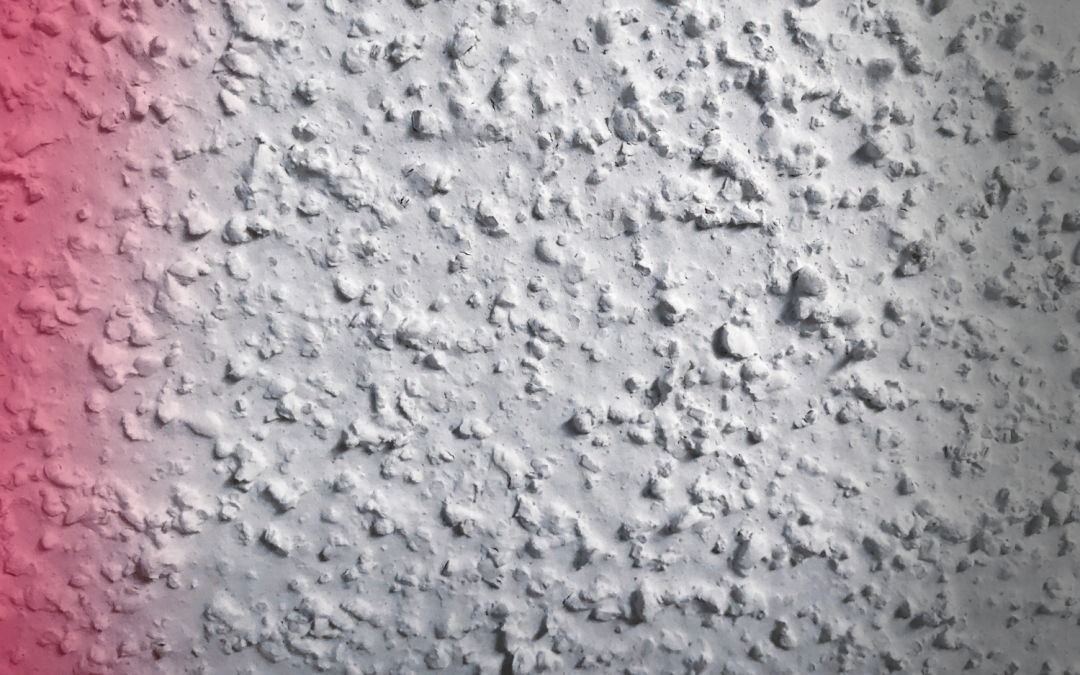
Cleaning a popcorn ceiling can feel risky. One wrong move and pieces start falling, leaving behind bare spots that are difficult to fix. The good news is that you can clean a popcorn ceiling without causing damage if you use the right methods and understand the limits of what cleaning can safely accomplish.
This guide explains how to clean popcorn ceiling surfaces step by step, what tools are safest, and when cleaning is not the right option at all.
It also covers health concerns, inspection considerations, and common mistakes so you can protect both your ceiling and your home.
What to Know Before Cleaning a Popcorn Ceiling
The safest way to clean a popcorn ceiling without causing damage is to start with dry, low-pressure methods and avoid moisture unless necessary.
Most damage happens when homeowners scrub too hard, spray liquids, or try to make the ceiling look brand new. Popcorn ceilings are fragile by design. They hide surface imperfections, but their textured finish easily traps dust and stains.
In older homes, these ceilings may also contain asbestos, which becomes a health concern when disturbed.
The U.S. Environmental Protection Agency explains that asbestos is most dangerous when fibers are released into the air due to damage or disturbance.
Therefore, this article helps you clean safely while knowing when it is better to stop and seek professional guidance.
What Is a Popcorn Ceiling and Why Does It Get Dirty?
A popcorn ceiling is a sprayed-on textured finish that attracts and holds dust more than a flat ceiling. The uneven surface creates small pockets that catch airborne particles and keep them in place.
Popcorn ceilings often get dirty because:
- HVAC airflow pushes dust upward
- Ceiling fans circulate particles toward the ceiling
- Cooking smoke and grease rise and settle into the texture
- Humidity causes dust to cling instead of falling away
- Minor leaks leave visible stains that linger
Over time, this buildup can make rooms feel darker and less clean, even if walls and floors are well-maintained.
Is It Safe to Clean a Popcorn Ceiling Yourself?
Yes, it is usually safe to clean a popcorn ceiling yourself if the texture is intact, dry, and not shedding.
Problems occur when the ceiling is already weakened or when cleaning methods are too aggressive.
DIY Cleaning is Generally Appropriate When:
- The ceiling looks solid and evenly textured
- Touching it lightly does not release debris
- There are no signs of moisture damage
- You are only removing surface dust
DIY Cleaning Becomes Risky When:
- The texture flakes or crumbles
- Stains suggest water intrusion
- The home is older, and the materials are unknown
- You plan to use water or pressure
If there is any doubt, it is safer to pause. A home inspection can help determine whether the ceiling issue is cosmetic or tied to a larger concern.
Check for Asbestos Before Cleaning a Popcorn Ceiling
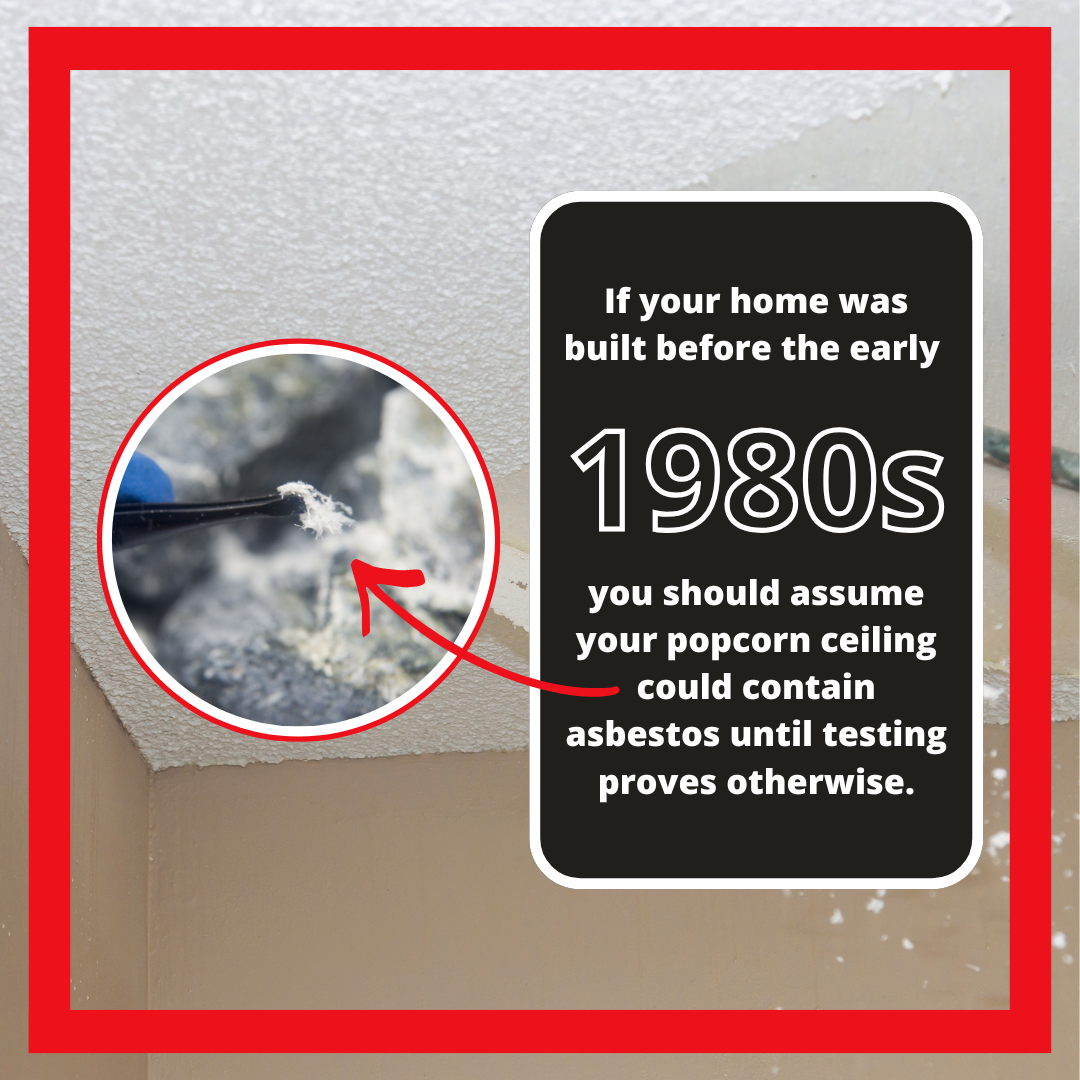
If your home was built before the early 1980s, you should assume the popcorn ceiling could contain asbestos until testing proves otherwise.
Asbestos was commonly used in textured ceiling materials for fire resistance.
Even light scraping or aggressive brushing can release fibers if asbestos is present.
What This Means for Cleaning
- Dry, light-touch dusting is the only reasonable DIY option
- Scraping, sanding, or soaking the ceiling should be avoided
- Testing is recommended before deep cleaning in older homes
How to Clean a Popcorn Ceiling Without Causing Damage
The safest way to clean a popcorn ceiling is to work slowly, use dry tools, and apply almost no pressure. Your goal is to lift dust off the surface, not scrub it away.
Prepare the Room First
Preparation reduces the chance of rushing or bumping the ceiling.
- Turn off ceiling fans and HVAC airflow.
- Remove small furniture and décor.
- Cover floors and remaining furniture with drop cloths.
- Wear eye protection and a dust mask.
- Use a sturdy step ladder so you can work at the same level as the ceiling.
Step-by-Step Dry Cleaning Method
This method works well for most dust and light buildup.
- Test a small area first. Lightly touch a corner to see if the texture falls.
- Use a microfiber duster on an extension pole. Microfiber traps dust gently.
- Clean in small sections. Work in areas about 3 to 4 feet wide.
- Use slow, single-direction passes. Avoid back-and-forth motion.
- Let dust fall naturally. Do not press harder to “catch” debris.
- Stop if shedding begins. If the texture loosens, move on or stop entirely.
Using a Vacuum Carefully
A vacuum can help when used correctly.
- Use a soft brush attachment
- Keep suction on the lowest setting
- Barely touch the surface
- Avoid edges, seams, and fixtures
Cleaning Tools That Are Safe for Popcorn Ceilings
Soft, lightweight tools reduce the risk of texture loss. Always choose cleaning tools that require minimal pressure.
Safer Tool Options
- Microfiber duster with extension pole
- Soft vacuum brush attachment
- Dry microfiber mop head
- Lint roller on a pole for small areas
Tools to Avoid
- Stiff scrub brushes
- Steam cleaners
- Wet sponges or cloths
- Spray bottles that are applied directly to the ceiling
- High-powered vacuums without control
A simple rule: if the tool could damage a foam cup, it can damage a popcorn ceiling.
How Moisture and Humidity Affect Popcorn Ceilings
Moisture is one of the fastest ways to damage popcorn ceilings. Even high humidity can weaken the texture over time.
Bathrooms, kitchens, and laundry rooms are common trouble spots, especially when ventilation is poor.
Warning Signs of Moisture Damage
- Yellow or brown stains
- Bubbling or peeling texture
- Soft or sagging drywall
- Musty odors near the ceiling
Cleaning does not fix moisture problems. Ventilation and leak sources must be addressed first.
Mistakes That Commonly Damage Popcorn Ceilings
Most popcorn ceiling damage happens when homeowners try to make the ceiling spotless instead of simply cleaner.
Popcorn texture is not designed to handle heavy cleaning.
One of the most common mistakes is spraying water or cleaner directly onto stains. Moisture quickly softens the texture, causing it to smear or fall away, and leaving bare spots that stand out in certain lighting.
Another frequent issue is pressing too hard with cleaning tools. Even soft tools can cause damage if pressure is applied. Popcorn ceilings respond best to the lightest possible touch.
Scrubbing the same spot repeatedly often leads to breakdown of the texture. If dust does not lift easily, it is usually embedded due to humidity or age, and repeated passes weaken the surface.
Using a vacuum incorrectly is another source of damage. High suction can pull the texture loose, especially near seams, corners, and fixtures where the material is thinner.
Finally, cleaning without testing first often leads to damage in visible areas. Testing a hidden spot helps you understand how fragile the ceiling is before moving into open view.
Best Prevention Tip
If dust does not come off easily, it is safer to leave it than to force it. A mostly clean ceiling that is intact looks far better than one with patchy texture loss.
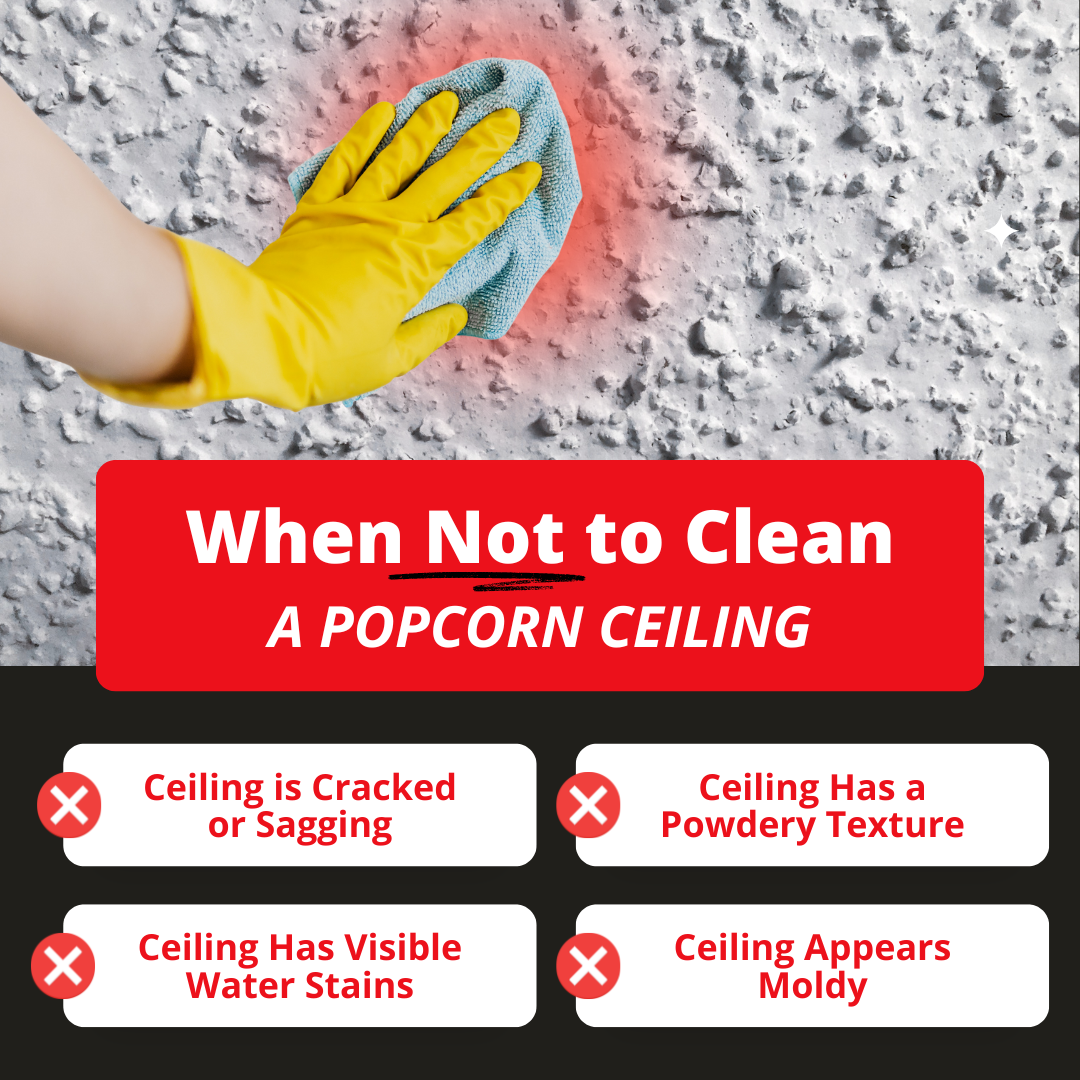
When Not to Clean a Popcorn Ceiling
There are times when cleaning a popcorn ceiling causes more harm than good. If the ceiling shows signs of deterioration, moisture, or movement, cleaning can worsen the condition.
Do not clean if you see flaking or a powdery texture, which suggests the material has weakened with age.
Cracks or sagging may point to structural movement or long-term moisture exposure. Cleaning these areas often causes the texture to fall away.
If there are active or old water stains, cleaning should wait until the moisture source is identified. Stains often indicate roof, plumbing, or ventilation issues.
Mold-like discoloration is another reason to stop. Cleaning can release spores into the air and spread contamination.
If the ceiling moves or feels soft when pressed lightly, do not clean it. This suggests compromised drywall or fasteners.
At this stage, evaluation is more important than cleaning. Understanding the cause of the problem helps prevent unnecessary damage and guides the next steps.
How Popcorn Ceiling Damage Can Affect a Home Inspection
Ceiling damage often raises questions during a home inspection, even when the issue appears cosmetic. Inspectors look for signs of moisture, structural issues, and deferred maintenance.
Ceiling concerns often lead to follow-up questions about:
- Roof condition
- Plumbing leaks
- Ventilation performance
- Past repairs
Even small damaged areas can affect buyer confidence because ceilings are difficult and costly to repair.
Should You Clean a Popcorn Ceiling Before Selling a Home?
Cleaning a popcorn ceiling before selling can help if done carefully and only when the texture is intact. A cleaner ceiling can brighten rooms and improve first impressions.
Cleaning Helps When:
- Dust is visible in natural light
- The ceiling is dry and stable
- Only dry methods are used
Cleaning Hurts When:
- Texture flakes or sheds
- Stains suggest leaks
- The ceiling may contain asbestos
Many sellers benefit from a pre-listing inspection to identify ceiling issues before buyers do.
Quick Guide to Safe Popcorn Ceiling Cleaning Methods
|
Cleaning Need |
Safest Method |
What to Avoid |
Next Step if It Fails |
|
Light dust |
Microfiber duster |
Scrubbing |
Gentle vacuum brush |
|
Corners |
Soft duster |
High suction |
Leave residue |
|
Small spots |
Light dabbing only |
Spraying |
Investigate cause |
|
Humid rooms |
Improve ventilation |
Wet cleaning |
Moisture evaluation |
|
Flaking texture |
Do not clean |
Any contact |
Professional review |
When to Call a Professional Instead
Professional help is best when the ceiling condition or material safety is uncertain.
Call a professional if:
- Asbestos may be present
- The ceiling is water-damaged
- Texture sheds during cleaning
- Renovation is planned
Related Questions
Can you vacuum a popcorn ceiling safely?
Yes, as long as you replace the vacuum with a soft brush, low suction, and very light contact.
How often should you clean a popcorn ceiling?
Cleaning a popcorn ceiling once or twice a year is enough for most homes.
Is it better to paint or clean a popcorn ceiling?
Cleaning removes dust. Painting covers stains, but makes future repairs and mold removal more difficult.
Does cleaning a popcorn ceiling affect home value?
Careful cleaning can improve a home’s appearance. However, damage can reduce buyer confidence.
Can damaged popcorn ceilings be repaired?
Yes, but matching texture is difficult, and repairs are often noticeable during a home inspection.
Conclusion
Knowing how to clean a popcorn ceiling without causing damage comes down to patience, gentle tools, and knowing when to stop. Dry methods work best; moisture is risky, and older ceilings deserve extra caution.
If you are unsure about ceiling condition, moisture issues, or material safety, scheduling a professional home inspection can help you understand the risks before small problems become expensive ones.
For homeowners buying, selling, or maintaining a property, Harmony Home Inspection Services can provide clarity and guidance so you can protect both your home and your investment.