
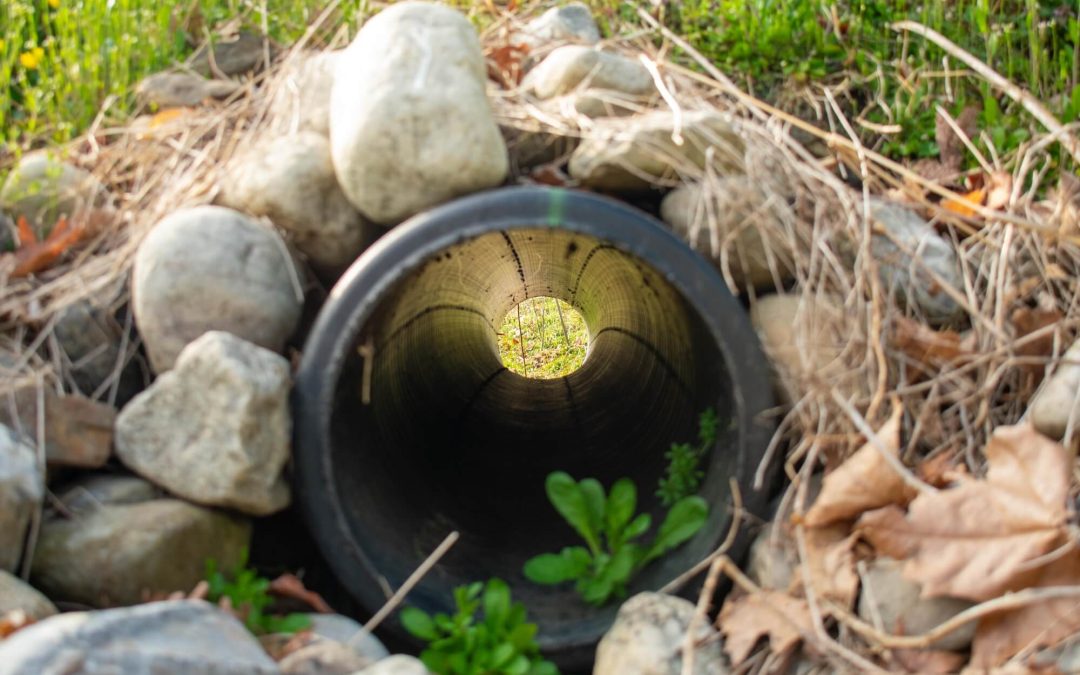
The decision to improve drainage isn’t just about preventing soggy lawn patches or muddy walkways. Water that doesn’t drain properly accumulates where it causes the most damage: against foundations, under slabs, in crawl spaces, and in basements. The consequences of chronically poor drainage compound over the years into foundation problems, mold growth, and structural deterioration, all of which cost significantly more to address than the drainage improvements that would have prevented them.
How to Identify What’s Causing Problems Before You Improve Drainage
The most common mistake homeowners make when trying to improve drainage is applying a solution before fully understanding the problem. Installing a French drain in the wrong location, regrading in the wrong direction, or adding downspout extensions that discharge into an already saturated area could move the problem rather than solve it. The starting point is observation, watching where water accumulates during and after a significant rain event and noting how long it takes to dissipate. Water that stands for less than an hour in a low area is behaving normally in most soil types. Water that stands for 12 or more hours indicates a grading problem, a soil permeability issue, or a high water table that limits absorption.
Grading is the first variable to evaluate. The ground around the foundation should slope away from the structure at least six inches over the first ten feet. Settlement over time can reverse this grade, directing water toward the foundation. Walking the perimeter during a rain event reveals grading deficiencies that are invisible when dry. Downspouts that discharge too close to the foundation are among the most common and most correctable drainage problems. A four-inch rainfall on a medium-sized roof generates thousands of gallons of runoff; downspouts that dump that volume within two or three feet of the foundation direct it exactly where it shouldn’t go.
Solutions That Effectively Improve Drainage for Different Conditions
Once the source of the drainage problem is understood, the appropriate solution becomes significantly more apparent. Regrading, reshaping soil around the home to restore positive slope away from the foundation, addresses the most common source of foundation water intrusion. Modest regrading by adding and shaping soil is within DIY capability. More significant regrading involving large soil volumes or hardscaping requires professional equipment and planning.
French drains, perforated pipe buried in a gravel-filled trench, collect subsurface water and redirect it to a discharge point. They’re the appropriate solution when surface regrading alone isn’t sufficient because water is coming from below, a high water table, spring saturation, or lateral water movement from an uphill area. A French drain without an appropriate discharge point simply moves saturated conditions elsewhere; the discharge must terminate somewhere with capacity to receive the water.
Downspout and Surface Solutions to Improve Drainage at the Perimeter
The perimeter solutions that improve drainage most immediately are often the most accessible and least expensive, worth addressing before investing in more complex subsurface systems. Downspout extensions carry roof runoff further from the foundation and cost very little. Extensions that discharge four to six feet from the foundation into a gently sloping area produce immediate, measurable improvement in how much water reaches the foundation zone during rain events.
Dry creek beds and rain gardens improve drainage while adding visual interest. A dry creek bed routes surface water through a designed channel lined with river rock, directing flow away from the foundation. A rain garden, a shallow depression planted with water-tolerant plants, intercepts runoff and promotes infiltration in a defined area, reducing the volume of water that reaches the foundation or low-lying areas of the yard.
Frequently Asked Questions (FAQs)
How do I know if my drainage problem is a grading issue or a soil issue?
A grading problem produces visible surface water flowing toward the foundation or pooling in specific low areas. A soil permeability issue produces standing water that doesn’t move even when grading appears correct; the water can’t infiltrate dense soil beneath it. Clay-heavy soils are the most common culprit, and the solution differs from a grading fix: amending soil with compost, installing subsurface drainage, or selecting deep-rooted plants that improve soil structure over time.
Can I improve drainage myself or do I need a professional?
Several improvements are within DIY capability: extending downspouts, adding soil to restore foundation grading, installing dry creek beds, and building simple rain gardens. French drains are manageable for determined homeowners with excavation equipment access, though correct pipe placement and discharge planning require care. Drainage problems involving the foundation itself warrant professional assessment before any DIY intervention.
How do I prevent erosion after improving drainage?
Any disturbed soil subject to water flow is vulnerable to erosion until vegetation is established. Hydroseeding or sodding regraded areas immediately after work prevents erosion that can undo the improvement. Erosion control fabric stabilizes surfaces while grass establishes. In drainage channels and dry creek beds, river rock prevents erosion in areas where water velocity makes vegetation impractical.
What plants help improve drainage in a yard?
Deep-rooted plants improve soil permeability over time by creating channels for water infiltration and breaking up compacted layers. Native grasses, willows, dogwoods, and swamp maples tolerate wet conditions while contributing to improved drainage through root activity and transpiration. Rain garden plantings should focus on water-tolerant natives that can handle both periodic inundation and dry periods between rain events.
Harmony Inspection Services provides home inspection services in the Atlanta Metro area. Contact us to schedule an inspection today!