
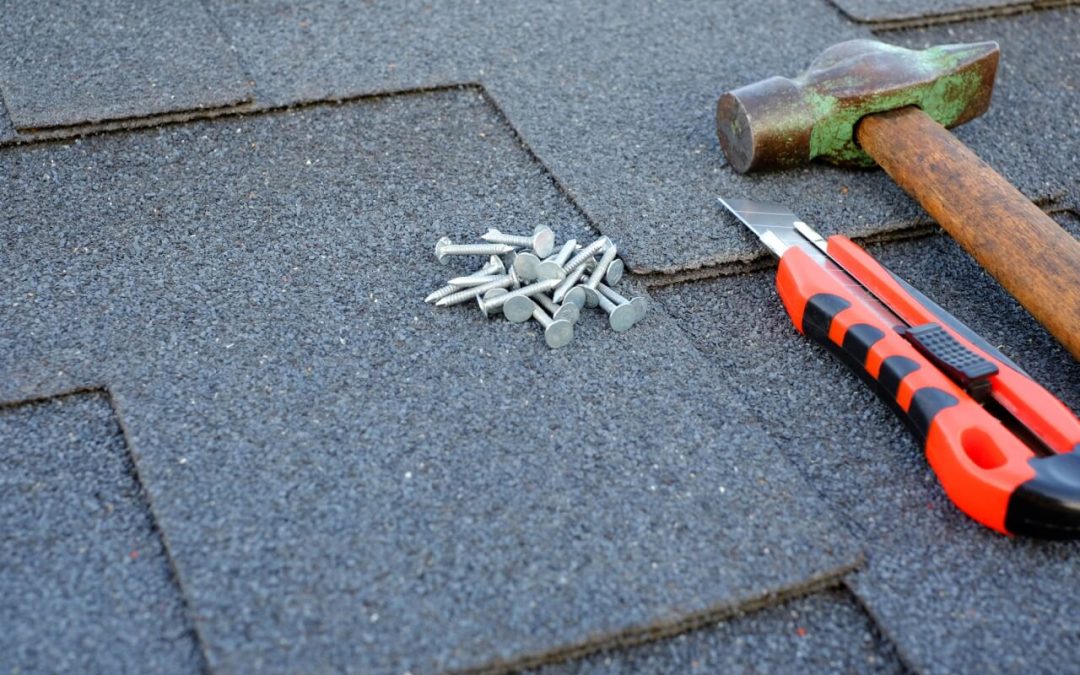
Maintaining your roof is the home maintenance responsibility that most homeowners acknowledge but don’t actively practice. A roof that receives consistent, proactive attention performs significantly closer to its maximum expected service life than one that is ignored until interior symptoms appear.
The Inspection Habits That Are Central to Maintaining Your Roof
A twice-yearly inspection is the habit that catches developing conditions while they’re still repairs rather than replacements. The spring inspection evaluates what winter produced: shingles that lifted, cracked, or lost granules during freeze-thaw cycling, and flashing that separated at chimneys, skylights, and roof-to-wall transitions. The fall inspection prepares the roof for what winter will produce: cleaning gutters, removing debris from valleys, confirming flashing is sealed, and identifying any shingle conditions that cold weather will accelerate. Maintaining your roof doesn’t require getting on the roof for every inspection. A ground-level inspection with binoculars is safer and still effective for identifying the most visible conditions. What a ground-level inspection can’t evaluate, such as flashing integrity, sealant condition around penetrations, and early-stage granule loss, is what periodic professional inspection adds.
The Task With the Most Downstream Consequences
Gutters are the roof component most homeowners think of separately from the roof, but gutter performance is directly connected to roof performance because a gutter that isn’t functioning correctly sends water where it wasn’t intended to go. A gutter full of debris holds water against the fascia board, backs water up under the starter course of shingles, and in freezing conditions contributes to ice dam formation that forces water under the shingle surface and into the roof deck. Cleaning gutters at least twice a year is the task that prevents the most common and most expensive water intrusion pathways. Confirming that gutters slope correctly toward the downspout, that downspouts discharge at least six feet from the foundation, and that no sections have pulled away from the fascia or developed low spots where water pools rather than drains is the complete evaluation that most homeowners skip in favor of simply removing the debris.
When Maintaining Your Roof Requires More Than Observation
Maintaining your roof effectively means understanding which conditions require immediate repair and which can be monitored. A missing shingle, failed flashing at a penetration, or a lifted shingle edge is a repair that warrants prompt professional attention. The longer any breach in the roof surface remains unrepaired, the larger the repair becomes and the more materials it involves. Maintaining your roof also means knowing when the roof has reached the point where maintenance is extending a system due for replacement rather than preserving one with meaningful remaining service life. A roofing professional who can assess overall condition, remaining granule coverage, substrate condition, and flashing integrity provides the evaluation that most directly informs whether continued repair investment makes financial sense or whether replacement planning is the more appropriate response.
Frequently Asked Questions (FAQs)
How often should I have a professional roof inspection?
A professional roof inspection every three to five years supplements the homeowner’s twice-yearly visual inspections with a close-up evaluation of conditions not visible from the ground. After any significant weather event, a professional inspection is warranted regardless of the regular schedule.
What are the most common signs that maintenance has been deferred too long?
Interior water stains on ceilings that correlate with rain events are the most direct sign of active water intrusion. Granule accumulation in gutters, dark or discolored shingle patches, curling or cupping shingle edges, and daylight visible through the roof deck from the attic are all signs of advanced deterioration. Addressing conditions before they produce interior symptoms is almost always significantly less expensive than addressing them after.
Can I walk on my roof safely for roof inspections?
Walking on the roof is not recommended as a regular part of roof maintenance for most homeowners; foot traffic on asphalt shingles causes granule displacement that accelerates the deterioration the inspection is meant to identify. A ground-level inspection with binoculars, supplemented by periodic professional inspection, balances thoroughness with safety. For flat or low-slope roofs, walking on the surface is generally safer, though professional inspection for detailed evaluation still applies.
Does maintaining your roof extend its service life?
Yes, consistently maintained roofs regularly achieve their maximum expected service life, while neglected roofs frequently fail earlier than their material would otherwise allow. Keeping gutters clear, addressing minor repairs before they expand, removing debris that traps moisture, and ensuring attic ventilation is functioning correctly are the tasks that most extend service life. Maintenance consistently produces better outcomes than neglect, even when it can’t guarantee any specific result.
What is the most important thing I can do for maintaining your roof right now?
If the roof hasn’t been inspected in more than a year, scheduling a professional inspection is the single most valuable maintenance action; it establishes a documented baseline from which all subsequent maintenance decisions can be made. If the roof was recently inspected and found in reasonable condition, cleaning the gutters and checking visible flashing at chimneys and skylights for signs of separation or failed sealant is the maintenance task with the most immediate protective value.
Harmony Inspection Services provides home inspection services in the Atlanta Metro area. Contact us to schedule an inspection today!