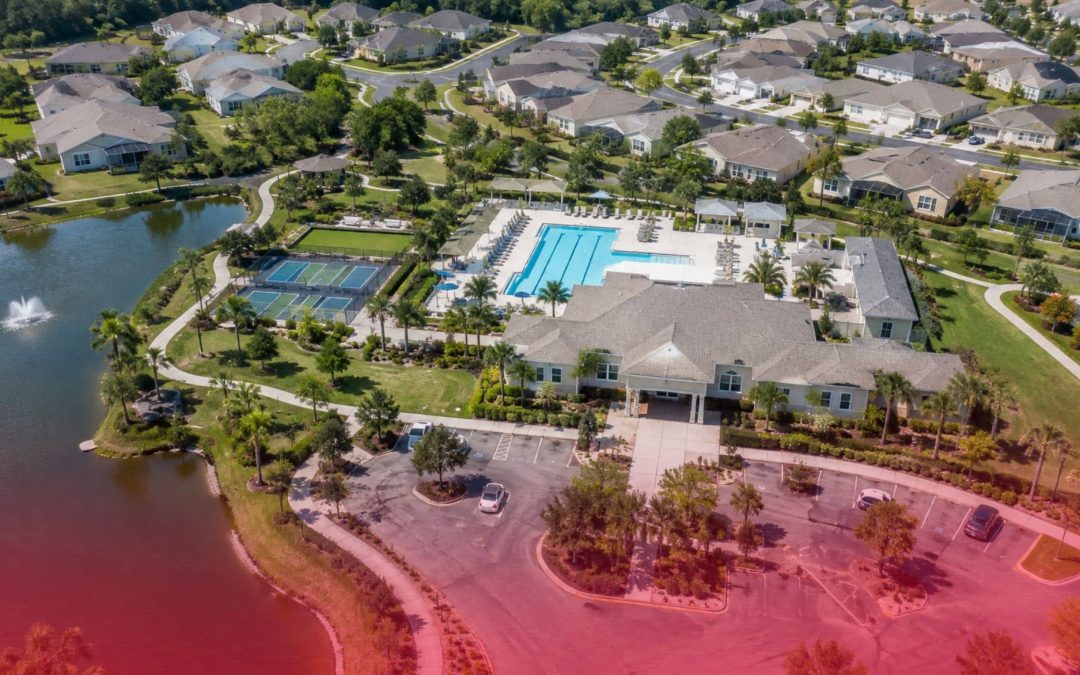
A 55+ community is age-restricted housing where at least 80 percent of the occupied homes have at least one resident who is 55 or older. You buy or rent a regular home, such as a single-family house, villa, townhome, or condo, and run your own household. Care and meals are not part of the deal.
At Harmony Home Inspection Services, we inspect homes across Metro Atlanta and North Georgia, including homes in 55+ communities. This guide covers how these communities work, what an inspection often finds in them, and which aging-in-place features are worth checking before you buy.
What Is a 55+ Community?
A 55+ community is a neighborhood that limits who can live there by age. You may also hear it called an active adult community or a 55 and over community. The name is shorthand for a federal rule.
Under the Housing for Older Persons Act, HUD requires that at least 80 percent of occupied units have at least one person who is 55 or older. The community must also publish and follow age policies, and it must check who lives there with surveys at least every two years.
That means “everyone must be 55” is a myth. A younger spouse or partner can often live in the home, depending on the community’s own rules. Those rules vary, so read the community’s covenants (CC&Rs) before you make an offer. For legal questions about age rules, talk to a real estate attorney.
55+ Communities We Serve Near Braselton, Hoschton, and Gainesville
Northeast of Atlanta, several well-known 55+ communities sit inside our service area. They differ in builder, home age, and setup, so what matters on an inspection differs too. Here are the ones we get asked about most.
Cresswind Georgia at Twin Lakes (Hoschton)
Built by Kolter Homes, Cresswind Georgia is the 55+ part of the larger Twin Lakes master-planned community in Hoschton. It is gated, and its two community lakes are a big part of the lifestyle. Homes here have been built since 2020, so most are still fairly new.
What to check: Newer homes can still have grading, drainage, and flashing problems. A home inspection before your builder’s warranty runs out helps catch them while they are still the builder’s to fix.
Del Webb at Château Élan (Braselton and Hoschton)
Del Webb (Pulte Homes) has been building here since 2018, next to the Château Élan resort. The community is planned for 784 homes, with both single-family and attached homes. You will find new construction and resale homes.
What to check: On a new build, look at drainage and the finish work. On a resale, ask for the age of the roof, HVAC, and water heater. If you are looking at an attached home, ask who maintains the shared roof and walls.
Village at Deaton Creek (Hoschton)
This Del Webb community in Hall County is one of the older and larger 55+ communities in the area, with more than 1,100 homes and a clubhouse of nearly 40,000 square feet. It is gated, and its homes were built roughly between 2006 and 2015.
What to check: Homes this age are reaching the point where the original roof, water heater, and HVAC are due for replacement. Ask for dates, and look closely at the attic and any past water stains.
Cresswind at Lake Lanier (Gainesville)
Kolter’s other Gainesville-area community is a gated 55+ neighborhood in Hall County with a large clubhouse, trails, and lake-access amenities. The homes were built over many years, starting in the mid-2000s, so you will see a wide range of ages. Most sales are now resale.
What to check: Because ages vary so much, check each home on its own. Pay attention to moisture, grading, and the age of major systems. Community docks and shared lake amenities are outside a home inspection.
Stephens Point (Gainesville)
Lennar built this gated community on Lake Lanier between about 2020 and 2023. It has 174 single-family homes, a clubhouse, a pool, and a courtesy dock. Today it is mostly resale.
What to check: These homes are only a few years old, but newer does not mean problem-free. Look for settling cracks, drainage near the foundation, and any work left unfinished from the original build.
Buying in a Community That Is Still Building
If a community is still adding phases, you may be next to active construction. Ask what is planned, check how water drains from nearby lots, and ask when the HOA expects to take over from the builder.
Types of Homes in 55+ Communities
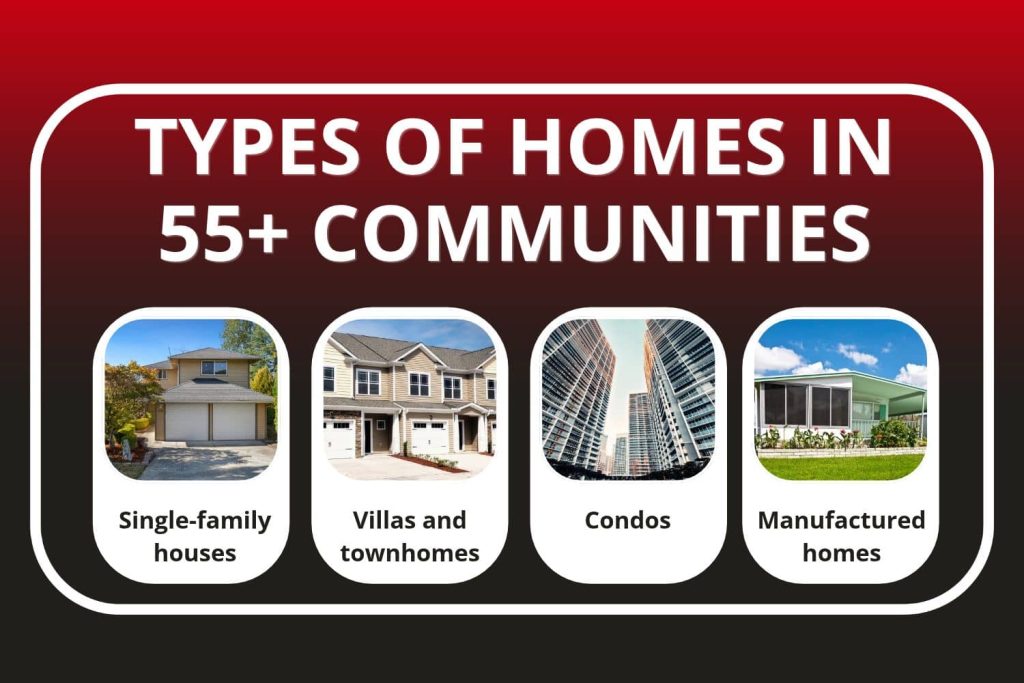
The homes in these communities come in several forms:
- Single-family houses. Detached homes on small lots, often one story.
- Villas and townhomes. Attached homes that share walls, and sometimes roofs.
- Condos. Units in a larger building, with shared hallways and systems.
- Manufactured homes. Factory-built homes, often in a park-style community.
Each type brings different upkeep and different inspection limits. Our post on inspecting different types of homes explains how inspections differ for condos, townhomes, and manufactured homes.
How 55+ Communities Compare to Other Senior Housing
A 55+ community is housing, not care. Other options add services:
| Type | What you get | Care included? |
|---|---|---|
| 55+ or active adult community | A regular home in an age-restricted neighborhood | No |
| Independent living | Apartments, often with meals and activities | Some services |
| Assisted living | Licensed housing with help for daily tasks | Yes |
Amenities like a clubhouse, pool, or walking trails vary, so ask what is included.
Pros and Cons of Living in a 55+ Community
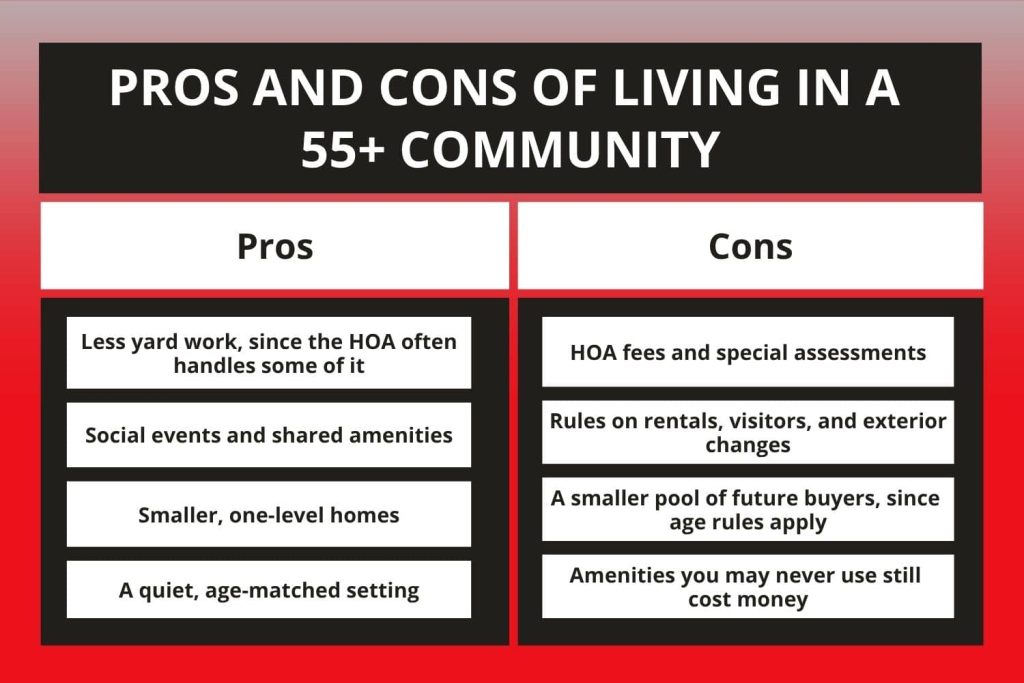
Buyers often like the low-maintenance lifestyle and the neighbors. Others find the rules and fees limiting.
What to Know About HOA Fees and Rules
Most 55+ communities have a homeowners association (HOA). Fees and services vary, so ask for the budget in writing. Many HOAs cover some exterior work, such as landscaping, roofs, or siding, but not all do. Ask for a clear list of what the HOA maintains and what you maintain.
Also ask about:
- Age and visitor policies
- Rules on rentals, pets, and exterior changes
- The reserve study, which shows whether the HOA is saving for big repairs
- Any special assessments planned or recently charged
What a Home Inspection Covers in a 55+ Community
A home inspection is as useful in a 55+ community as it is anywhere else, and an HOA does not replace one. Our home inspection reports on the parts of the home we can see and reach, and it includes thermal imaging to help find hidden problems.
A few limits are worth knowing:
- If the HOA maintains the roof or siding, a problem there may not be your repair bill. Ask who is responsible before you negotiate.
- In attached villas and condos, we may not reach shared roofs, party walls, or building systems. Ask for the association’s maintenance records and reserve study.
- The clubhouse, pool, gates, and roads are outside a home inspection.
Common Inspection Findings in 55+ Communities
Every home is different, so treat this list as a checklist, not a prediction:
- Roof age and condition. Look at shingles, flashing, and past patches. Our guide on how long a roof should last helps you judge age.
- Grading and drainage. Much of North Georgia sits on red clay, which drains slowly. Poor grading can send water toward the foundation. Read how Georgia red clay affects your home’s foundation and drainage.
- Water heater age. An older tank can leak or fail without warning.
- HVAC age and access. One-story homes often have tight attic access. Our HVAC maintenance tips cover what keeps systems running.
- Plumbing and moisture. Check under sinks and around tubs and toilets for stains and soft spots. Illinois-based PI Home Inspection shows the risks of ignoring water damage on the ceiling, which often starts as a small stain.
- Electrical safety. Check the panel, outlets, and GFCI protection in kitchens, baths, and garages.
- Termites and wood damage. A wood-destroying insect (WDI) inspection checks for activity and damage.
- Radon. Radon can build up in any home, and you cannot see or smell it. Enviroquest in Pennsylvania explains whether radon has a smell. We offer radon testing.
- Manufactured home details. We also check tie-downs, skirting, the underbelly, and roof seams.
A sewer line check goes beyond a standard home inspection. If you want one, a plumber can scope the line. Boggs Inspection Services in Washington explains what a sewer scope inspection involves.
Aging in Place Features to Look For
Many buyers plan to stay in a 55+ community for years. Small features can make a home safer as needs change. AARP’s aging in place checklist suggests these upgrades, and you can spot many of them during a showing:
- A no-step entry. At least one way into the home without stairs.
- Wider doorways. Doors wide enough for a walker or wheelchair.
- Lever door handles. They are easier on stiff hands than round knobs.
- Grab bars. Look for them near the shower and toilet. If there are none, ask where they could go.
- Good lighting. Look for light switches at the top and bottom of stairs and easy-to-reach switches in each room.
- Sturdy handrails. Both sides of any stairs, firmly attached.
- Slip-resistant floors. Watch for slick tile in baths and entries, and secure any throw rugs.
- Working smoke and carbon monoxide alarms. Test them and note their age.
An inspector can note many of these features, but we do not assess accessibility codes or a person’s needs. Our home safety essentials post covers more safety basics.
Related Questions to Explore
- What age do you have to be to live in a 55+ community? Federal rules require at least 80 percent of occupied homes to have at least one resident who is 55 or older. Some communities set a higher age, so check their rules.
- Can someone under 55 live in a 55+ community? Often yes, as a spouse, partner, or family member of a resident, but each community sets its own rules. Read the CC&Rs.
- Do 55+ communities have HOA fees? Almost always. The amount and what it covers vary, so ask for the budget in writing.
- What is the difference between a 55+ community and assisted living? A 55+ community is housing with no care. Assisted living is licensed and helps with daily tasks like bathing and medication.
- Do I need a home inspection in a 55+ community? Yes. An HOA does not replace a home inspection. A home inspection gives you a clear picture of the home before you commit.
- Does the HOA cover the roof in a 55+ community? Sometimes. Many HOAs cover some exterior work, but it varies. Ask for the written breakdown.
When to Call a Professional
Some questions need more than a home inspection. Call a pro if:
- The inspection finds roof, foundation, or electrical problems. Hire a licensed specialist for a closer look.
- You smell mold or see signs of moisture. Ask about mold sampling.
- You have legal questions about age rules or HOA documents. Talk to a real estate attorney.
- You need accessibility changes. An occupational therapist or a contractor with accessibility experience can help.
Harmony Home Inspection Services has inspected homes since 2004, with more than 8,000 inspections across Metro Atlanta and North Georgia. We serve Braselton, Lawrenceville, Hoschton, Winder, Flowery Branch, Buford, Gainesville, Cumming, and nearby areas, and reports arrive within 24 hours.
Conclusion
- A 55+ community is age-restricted housing, not a care facility, and at least 80 percent of occupied homes must have a resident who is 55 or older.
- Ask what the HOA covers, then check the roof, drainage, water heater, HVAC, electrical, and radon.
- Look for aging-in-place features such as a no-step entry, wide doors, grab bars, and good lighting.
Thinking about a home in a 55+ community? Schedule a home inspection with Harmony Home Inspection Services and get a clear look at the home before you buy.